
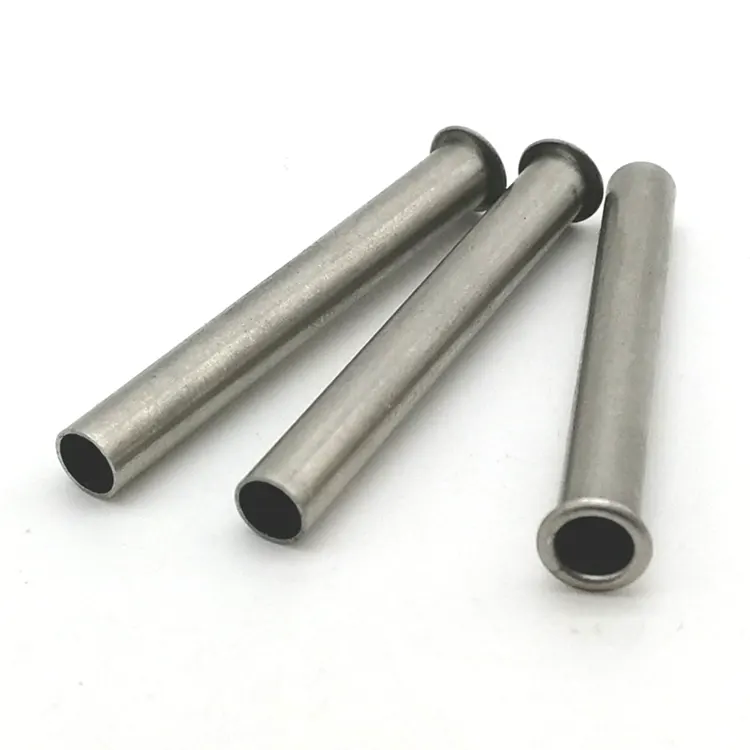
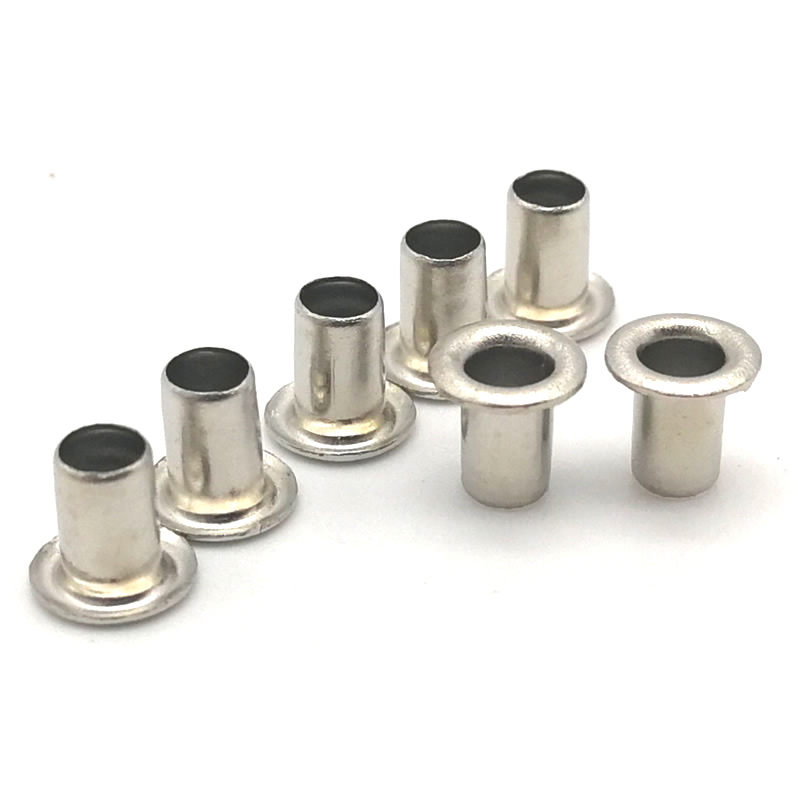
亜鉛メッキアイレット
Nuote Metals は、ターポリン、看板、DIY プロジェクトの永続的な補強のために作られた亜鉛メッキアイレットを紹介します。優れた耐食性により、信頼できる安全でプロフェッショナルな仕上がりが保証されます。素早く取り付けられるように設計されており、時間を節約しながら信頼できる強度を実現します。品質を求めるクリエイターやビルダーに最適なこれらのアイレットは、使用するたびに永続的な安心感を提供します。
お問い合わせを送信
製品説明
When sourcing hardware components, the smallest details often determine the longevity and safety of the final product. Among these, galvanised eyelets stand out as a critical component for industries ranging from automotive upholstery to industrial tarpaulins and outdoor signage.
At Nuote Metals, we understand that a seemingly simple metal ring carries significant responsibility. With decades of metallurgical expertise, we provide galvanised eyelets that are engineered not just for fit, but for long-term performance in demanding environments.
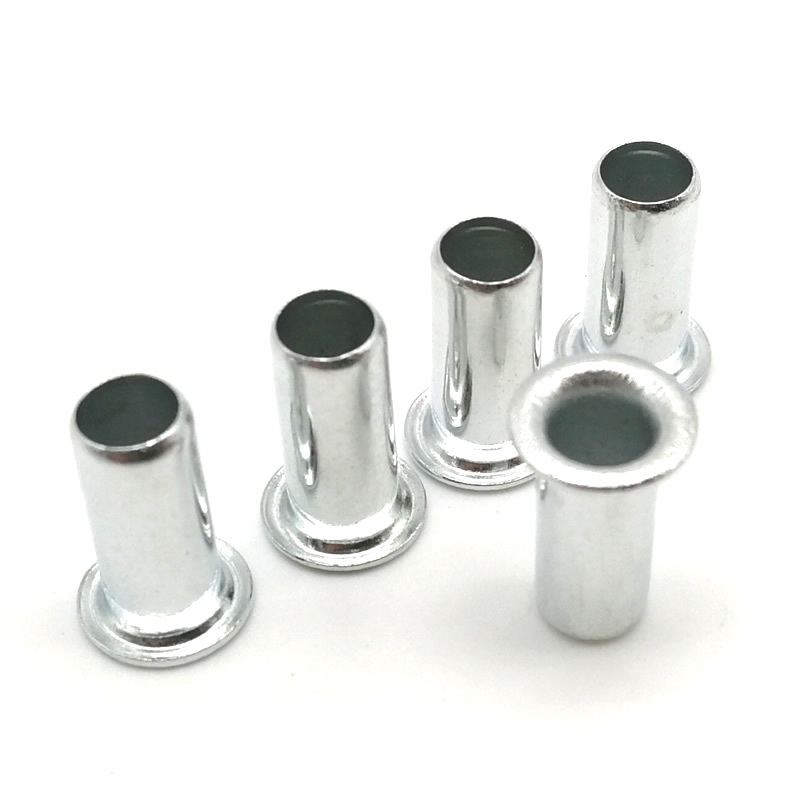
What Are Galvanised Eyelets and Why Do They Matter?
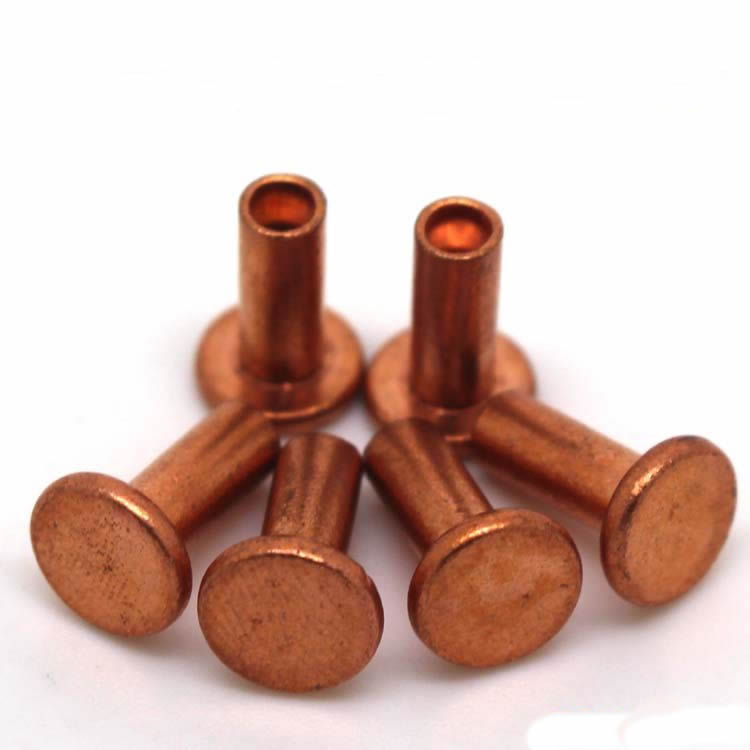
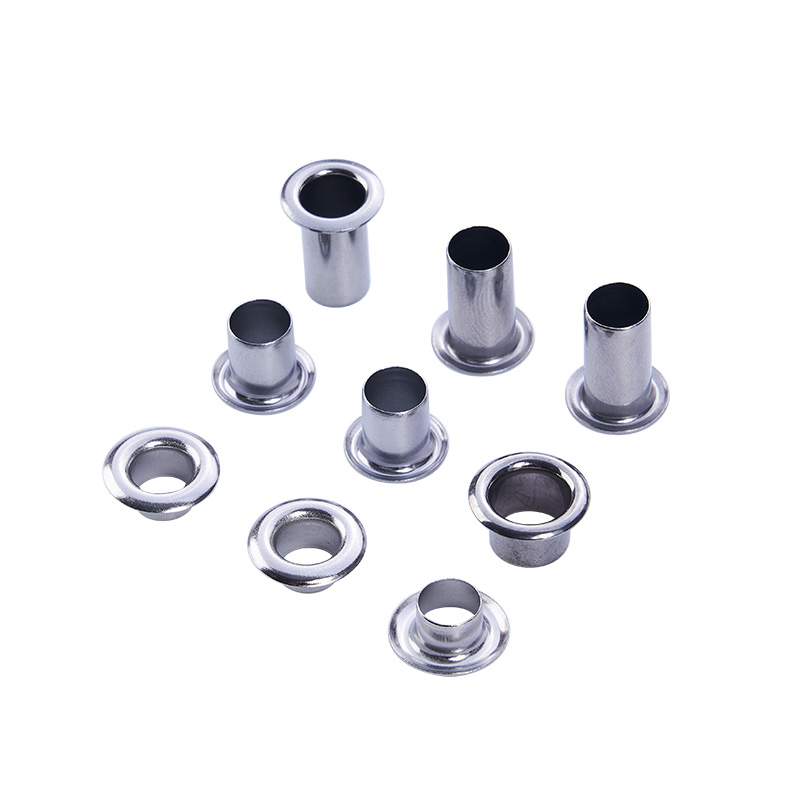
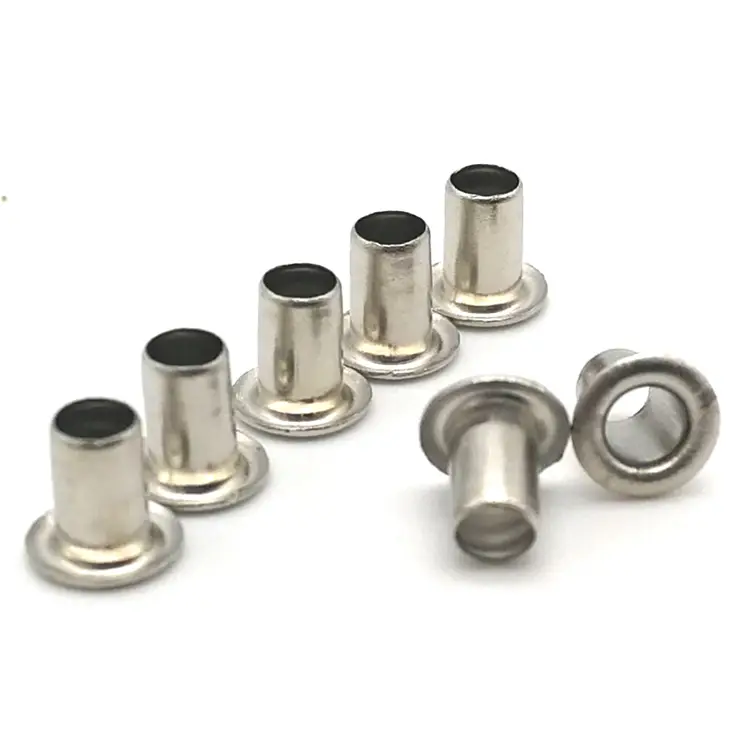
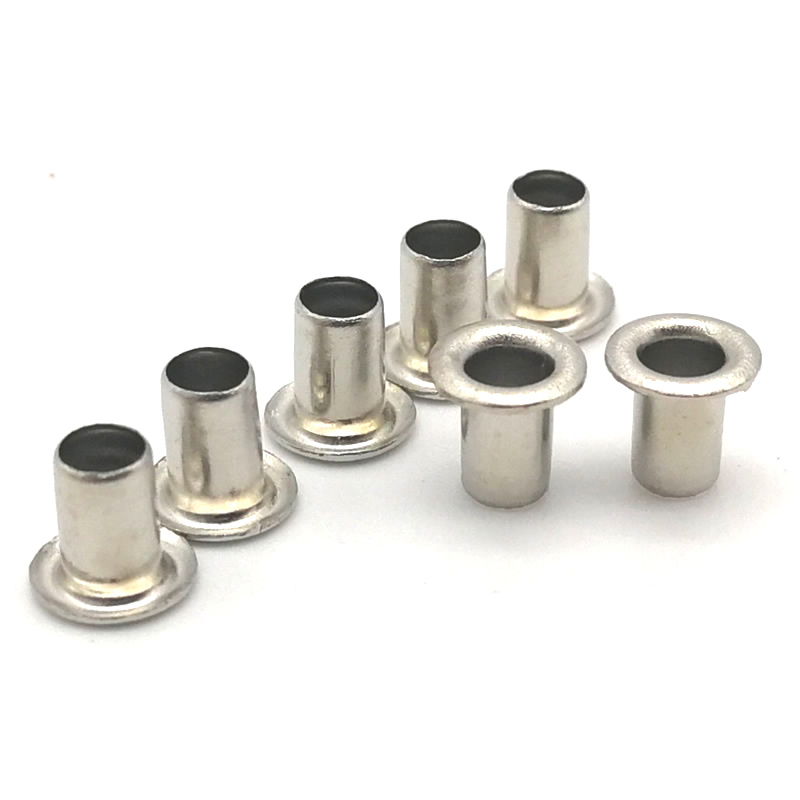
Galvanised eyelets are metal rings or grommets coated with a layer of zinc to prevent rust and corrosion. Unlike raw steel or brass alternatives, the galvanisation process ensures that these components maintain structural integrity even when exposed to moisture, chemicals, or extreme weather.
Nuote Metals specialises in manufacturing these components with high precision, ensuring that every eyelet meets strict industrial standards.
Key Product Parameters – Precision You Can Measure
To assist engineers, procurement specialists, and craftsmen in making informed decisions, we have structured the specifications of our galvanised eyelets into clear, actionable data points.
Material Composition
| Parameter | Specification |
| Base Metal | Low Carbon Steel (Q195 / Q235) |
| Coating | Hot-dipped Galvanised / Electro-galvanised |
| Zinc Coating Thickness | 40–60 µm (Hot-dipped) / 8–12 µm (Electro) |
| Hardness (Core) | HRB 70–85 |
| Corrosion Resistance | 72–120 hours (Neutral Salt Spray Test) |
Dimensional Specifications
Our galvanised eyelets are available in a wide range of sizes to accommodate various material thicknesses and load requirements. Below is a standard reference table:
| Model (ID) | Inner Diameter (mm) | Outer Diameter (mm) | Barrel Length (mm) | Suitable Material Thickness (mm) |
| NE-GE-04 | 4.0 | 8.5 | 4.5 | 1.0 – 2.5 |
| NE-GE-06 | 6.0 | 11.0 | 5.5 | 1.5 – 3.0 |
| NE-GE-08 | 8.0 | 14.0 | 6.5 | 2.0 – 4.0 |
| NE-GE-10 | 10.0 | 17.0 | 7.5 | 3.0 – 5.0 |
| NE-GE-12 | 12.0 | 20.0 | 8.5 | 4.0 – 6.0 |
Custom tooling is available for non-standard specifications.
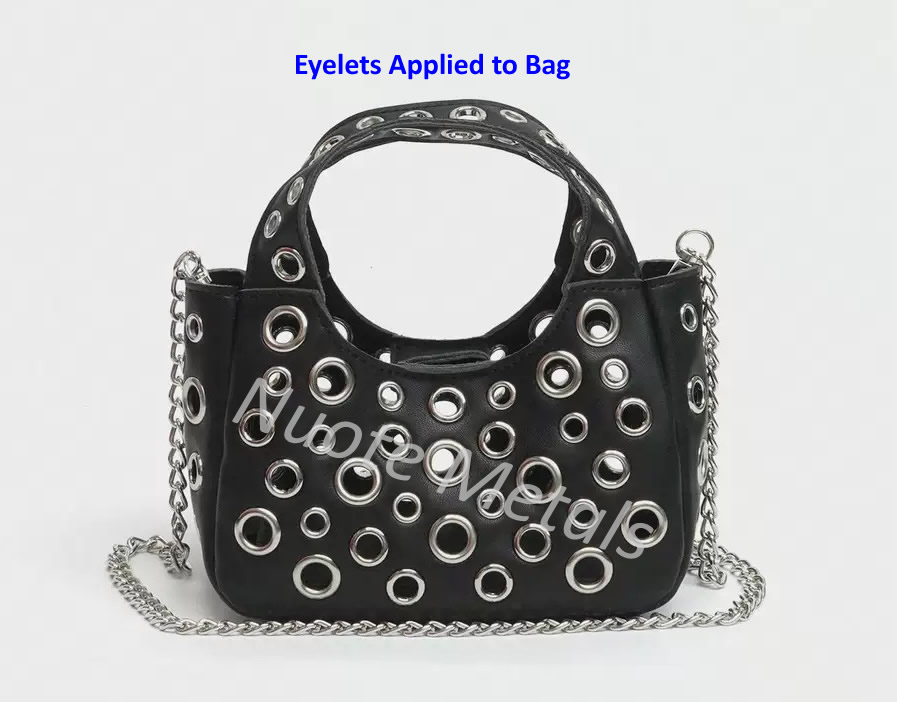
One Customer Example – Ladies‘ Handbag Decorative Accents
This is one of many applications for galvanised eyelets. We include it to show real production use, not to suggest limitation.
A European fashion accessories brand designed a new line of leather handbags featuring a distinctive decorative pattern—small metal dots arranged along the front flap and handle attachments. The design required 24 eyelets per bag, evenly spaced, purely for visual effect. The specifications were demanding: each eyelet had to be identical in appearance, with a consistent bright silver finish, no burrs or sharp edges (to avoid snagging clothing), and secure enough to survive daily handling without loosening.
The brand initially tried a local supplier, but the eyelets showed inconsistent flange diameters and uneven zinc coating. Some eyelets tarnished after a few weeks of wear testing.
Nuote Metals supplied galvanised eyelets – 3mm inner diameter, 6mm outer flange, 4mm barrel length, with a bright zinc plating and clear passivation. The hot-dip galvanised coating provided a uniform, bright finish that matched the brand’s silver-toned hardware. The wide flange sat flush against the leather, creating a clean, professional look. The eyelets passed 72 hours of salt spray testing with no discolouration.
The brand ordered 10,000 eyelets for a trial production run—enough for 400 bags. After three months of wear testing and customer feedback, they placed a production order for 300,000 pieces. Each bag uses 24 of our galvanised eyelets, with zero reported loosening or tarnishing after one year of retail sales.
Watch Our Eyelet Production Line in Action
Our progressive deep-drawing presses transform flat steel strip into finished galvanised eyelets in a single continuous sequence—blanking, drawing, piercing, flanging, and separating. The video shows the process from coil feeding to finished parts, with real-time quality monitoring at every stage.
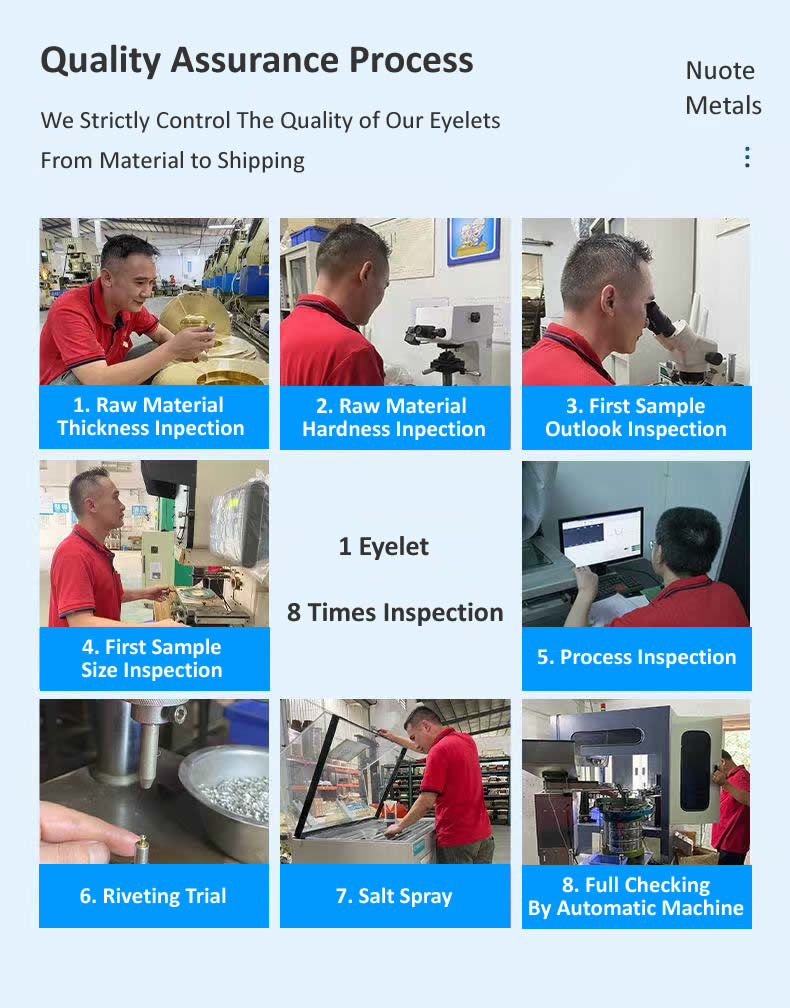
Our Quality Assurance – One Eyelet, Eight Checks
We do not rely on random sampling. Every batch of galvanised eyelets passes through eight separate quality gates before leaving our factory.
1. Raw material diameter check – Incoming wire is measured with a digital micrometer. Tolerance: ±0.02mm. Any coil outside this range is rejected.
2. Raw material hardness check – A sample from each coil is tested on a Rockwell hardness tester. For low-carbon steel, we require HRB 70–85.
3. First article appearance check – The first 10 eyelets are examined under 20× magnification. We look for cracks, burrs, uneven flanges, or surface marks.
4. First article dimensional check – Using calipers, micrometers, and an optical comparator, we measure inner diameter, outer flange, barrel length, flange thickness, and concentricity. All must be within drawing tolerances.
5. In-process inspection – During mass production, the operator pulls 5 eyelets every 500 pieces. Dimensions are verified with digital calipers and go/no-go gauges.
6. Test setting (trial riveting) – Every 2,000 pieces, we set 3 eyelets into a sample of your actual material (leather, canvas, or fabric). The clinch is inspected for symmetry and tightness.
7. Salt spray test – For galvanised eyelets, samples are placed in our salt spray chamber per ASTM B117. Hot-dipped galvanised: 72–120 hours minimum. A certificate is issued with the batch.
8. Final outgoing inspection – Before packaging, every eyelet passes through an optical sorting machine with high-speed cameras. It checks inner diameter, outer flange, and barrel length. A random AQL sample (Level II, 1.0) is then manually verified.
All inspection records are retained for five years and are included with every shipment.
Why Choose Nuote Metals for Galvanised Eyelets?
Adhering to Google’s EEAT (Experience, Expertise, Authoritativeness, and Trust) principles, we provide evidence of quality beyond mere marketing claims.
Experience in Metallurgy
With over 20 years of manufacturing experience, Nuote Metals controls the entire production chain. We do not simply stock standard parts; we understand the metallurgical properties of the steel and the electrochemical behavior of the zinc coating.
Rigorous Quality Control
Our galvanised eyelets undergo three mandatory quality checks:
Dimensional Accuracy: Laser micrometer verification to ensure inner and outer diameters match the spec sheet within ±0.1mm.
Coating Adhesion: Bend tests to confirm the zinc layer does not flake or peel during installation.
Salt Spray Testing: Batch samples are subjected to accelerated corrosion testing to validate rust resistance.
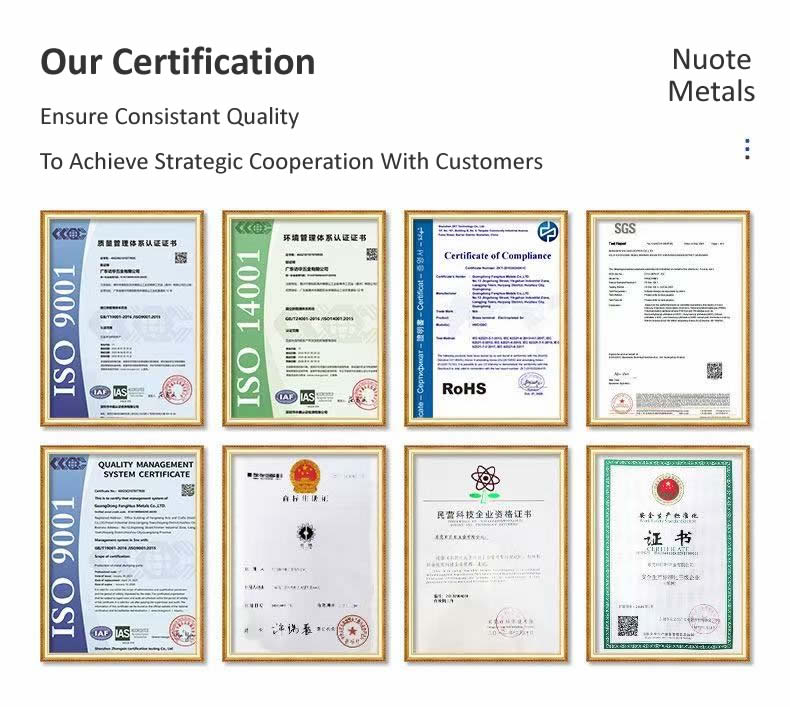
Compliance and Standards
All products are manufactured to comply with:
ISO 9001:2015 Quality Management Systems.
RoHS (Restriction of Hazardous Substances) for environmental safety.
ASTM A653/A653M for steel sheet zinc coating standards.
Installation Best Practices for Galvanised Eyelets
To maximize the performance of galvanised eyelets, proper installation is as critical as the product quality. Nuote Metals recommends the following guidelines:
Use the Correct Die Set
Mismatched dies are the primary cause of deformation. Ensure the die set matches the outer flange and barrel length precisely to avoid cracking the zinc coating.
Control Pressure
Excessive pressure can flatten the barrel, causing it to lose grip on the fabric. Moderate pressure ensures the barrel curls smoothly without exposing raw steel edges.
Pre-Punch Holes
For woven textiles, always pre-punch a clean hole rather than forcing the eyelet through. This prevents fraying and ensures the barrel seats perfectly.
High-Quality Galvanised Eyelet vs. Low-Quality Alternative – A Visual Comparison
| Characteristic | Our Galvanised Eyelet | Low-Quality Alternative |
|---|---|---|
| Flange finish | Smooth, uniform, bright zinc coating | Dull, uneven coating with visible drips |
| Flange thickness | Consistent 0.5–0.6mm, measured every batch | Variable, thin in some areas |
| Barrel integrity | Seamless deep-drawn, no splits | Seamed or cracked barrel |
| Clinch after setting | Symmetrical, tight, no cracks | Uneven, loose, or cracked clinch |
| Salt spray resistance | 72–120 hours (hot-dipped) | 24–48 hours, red rust appears early |
| Burrs | None, tumble-deburred | Sharp edges, risk of fabric snagging |
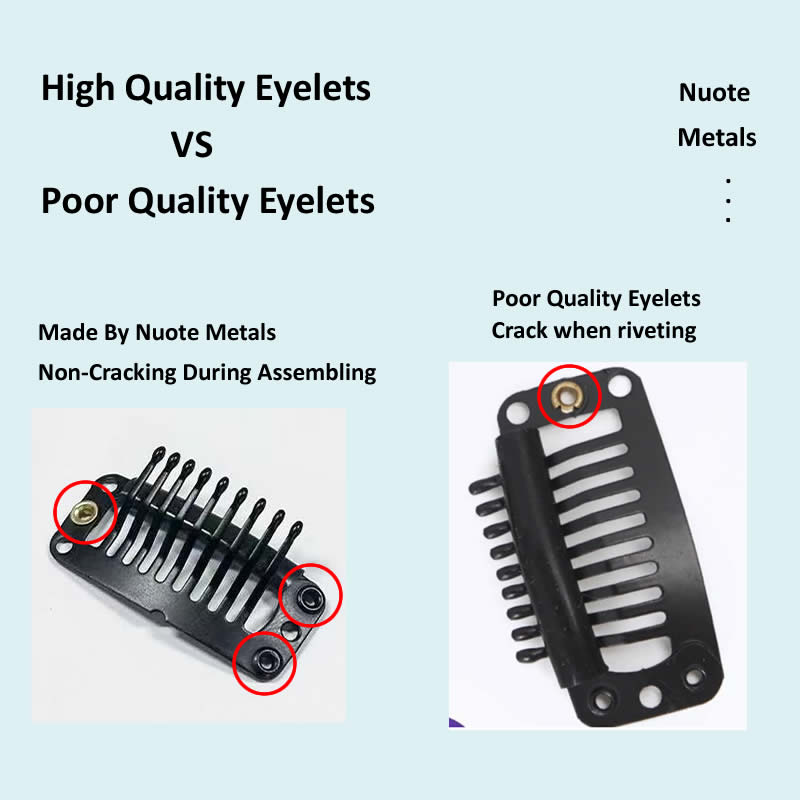
The difference is visible under magnification. Our galvanised eyelets have a smooth, consistent finish, a perfectly formed barrel, and a clinch that holds tight after thousands of flex cycles. Low-quality alternatives show uneven plating, barrel cracks, and poor clinch formation that loosens over time.
Frequently Asked Questions About Galvanised Eyelets
To assist our clients in selecting the right components, Nuote Metals has compiled the most common technical inquiries regarding galvanised eyelets.
Q1: What is the difference between hot-dipped galvanised and electro-galvanised eyelets? Which one should I choose for outdoor use?
A: The primary difference lies in the thickness and method of zinc application. Hot-dipped galvanised eyelets involve submerging the steel in molten zinc, resulting in a thicker coating (40–60 µm) and superior corrosion resistance, making them ideal for outdoor marine or agricultural applications. Electro-galvanised eyelets use an electrical current to apply a thinner, smoother layer (8–12 µm). These are better suited for indoor applications or light-duty uses where aesthetics and a polished finish are prioritized. For outdoor use lasting more than 5 years, Nuote Metals always recommends our hot-dipped galvanised series.
Q2: Can galvanised eyelets be used on materials other than fabric, such as plastic or thin metal sheets?
A: Yes, galvanised eyelets are suitable for various materials, but the selection depends on the material thickness and hardness. For soft plastics or thin aluminum sheets (up to 1.5mm), a standard barrel length eyelet works well. However, for thicker materials or high-vibration environments, we recommend consulting with Nuote Metals for a custom barrel length to ensure a proper roll-over. Using the correct setting tool is crucial to prevent cracking the base material.
Q3: How does Nuote Metals ensure that the zinc coating does not chip off during high-speed industrial setting?
A: Coating adhesion is a critical quality parameter we address during production. Our galvanised eyelets undergo a mandatory mandrel bend test before batch release. This test involves bending the eyelet 180 degrees around a mandrel equal to its diameter. If the zinc coating shows no flaking or peeling, the batch is certified for industrial setting. Additionally, we recommend using setting machines with adjustable depth stops to prevent excessive impact that could compromise the coating.
Conclusion
Selecting the right fastener is not merely about filling a hole; it is about ensuring the structural integrity and lifespan of the entire assembly. Galvanised eyelets from Nuote Metals combine precision engineering, robust anti-corrosion properties, and strict quality control to meet the demands of modern industry.
Whether you require standard stock for ongoing production or custom dimensions for a specialized project, Nuote Metals provides the technical expertise and product reliability necessary for success.
Contact Nuote Metals today to request a specification sheet or discuss your custom galvanised eyelets requirements.
ホットタグ: 亜鉛メッキアイレット、中国亜鉛メッキアイレット、中国アイレットメーカー
関連カテゴリー
お問い合わせを送信
下記フォームよりお気軽にお問い合わせください。 24時間以内に返信いたします。




X
当社は Cookie を使用して、より良いブラウジング体験を提供し、サイトのトラフィックを分析し、コンテンツをパーソナライズします。このサイトを使用すると、Cookie の使用に同意したことになります。
プライバシーポリシー