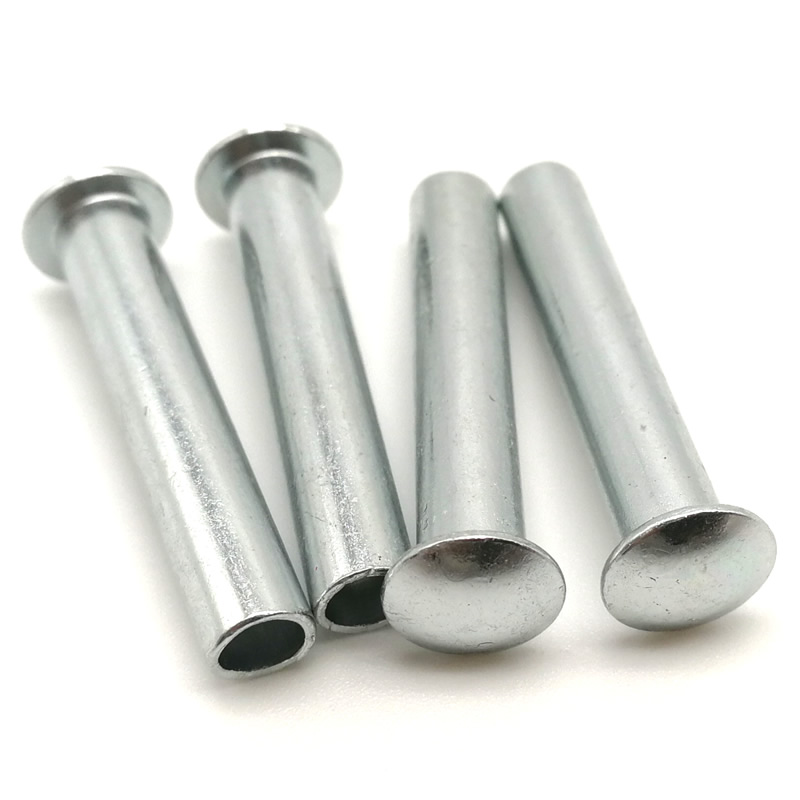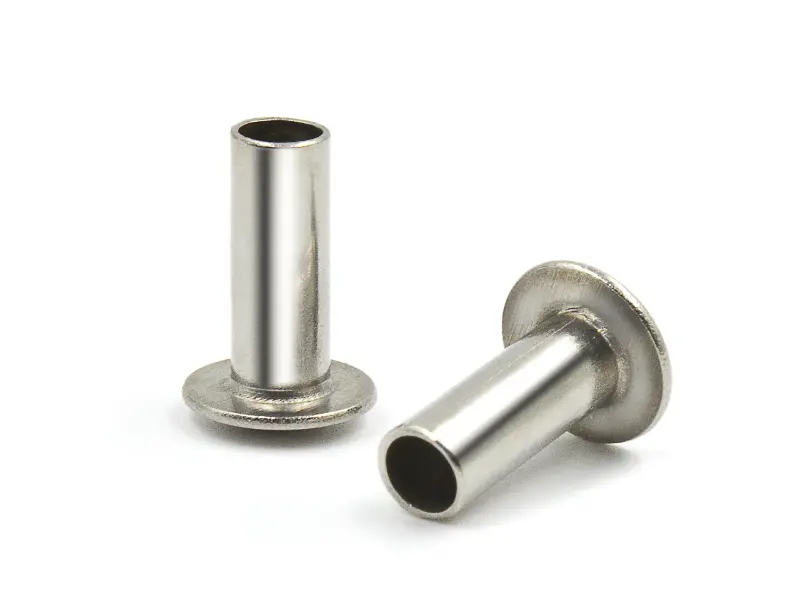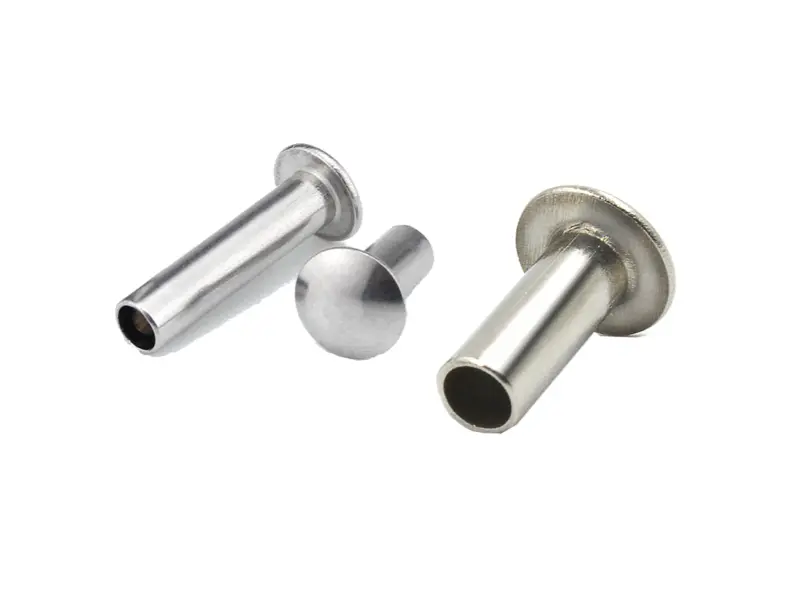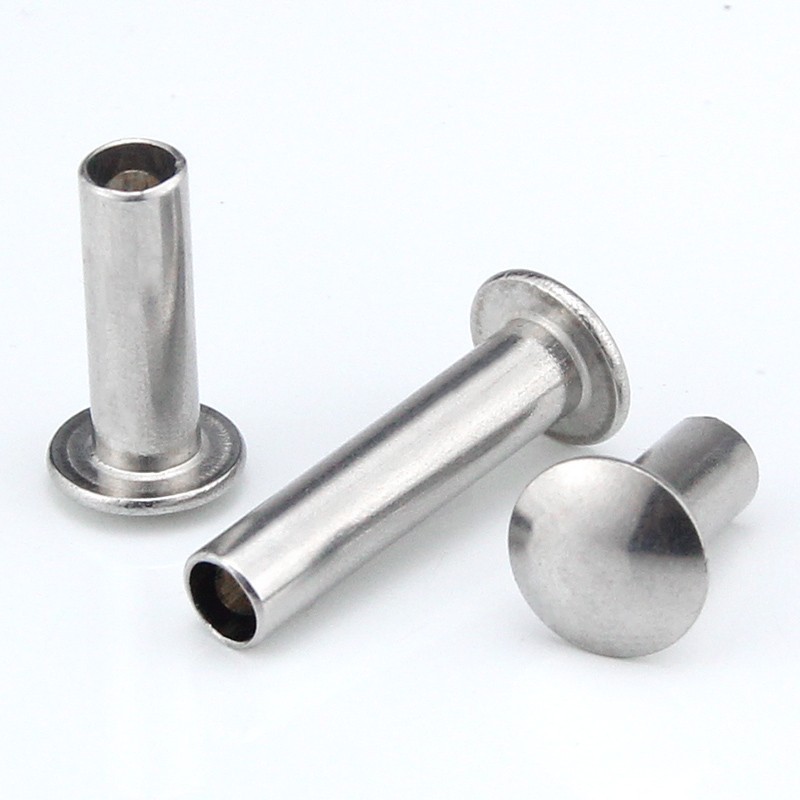
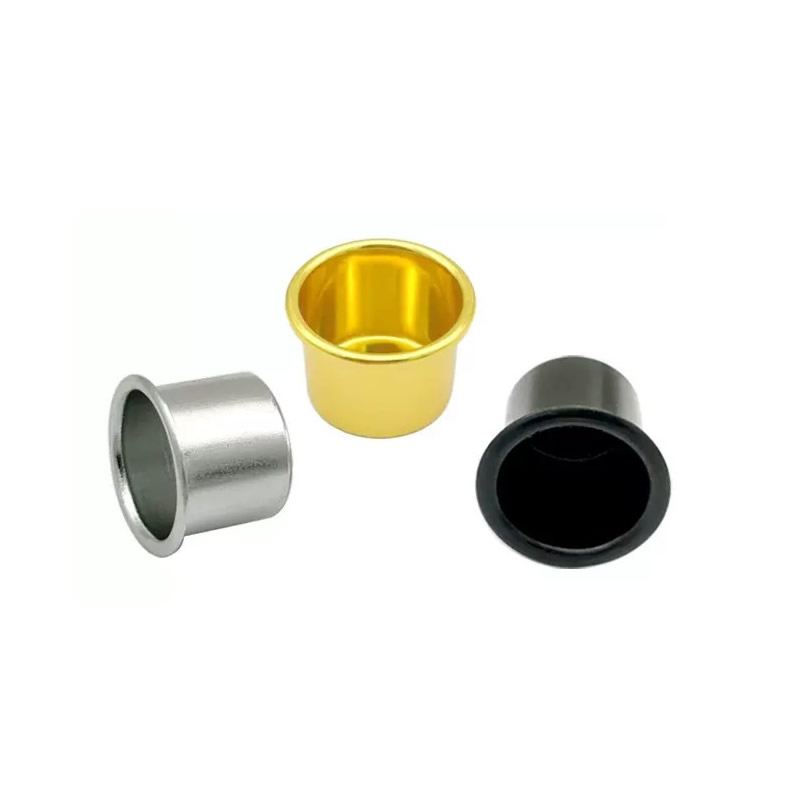
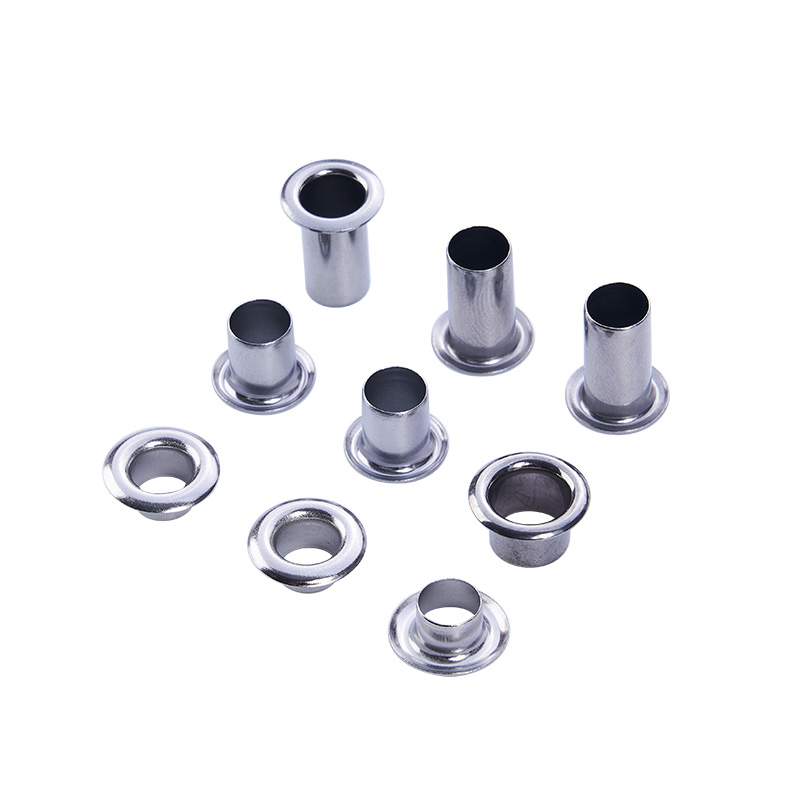
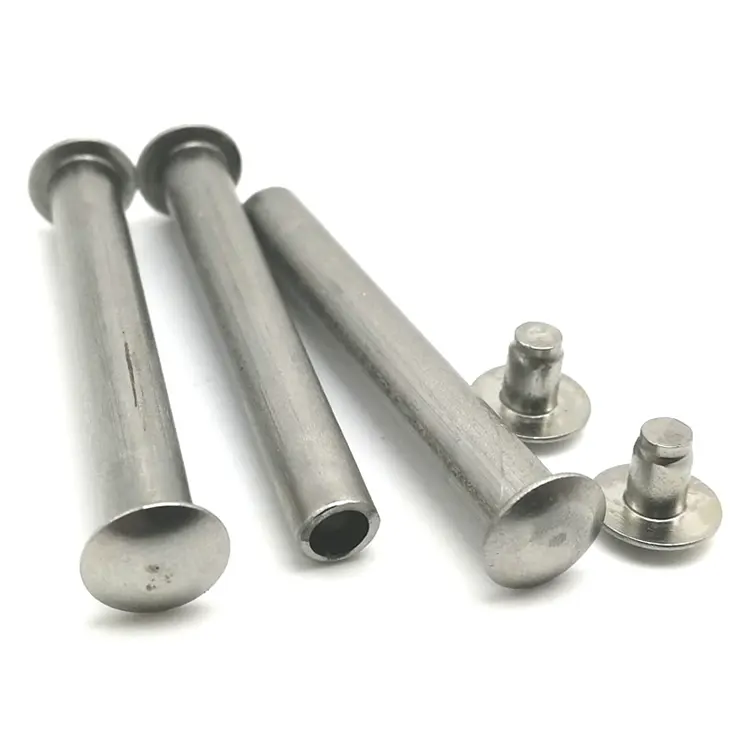
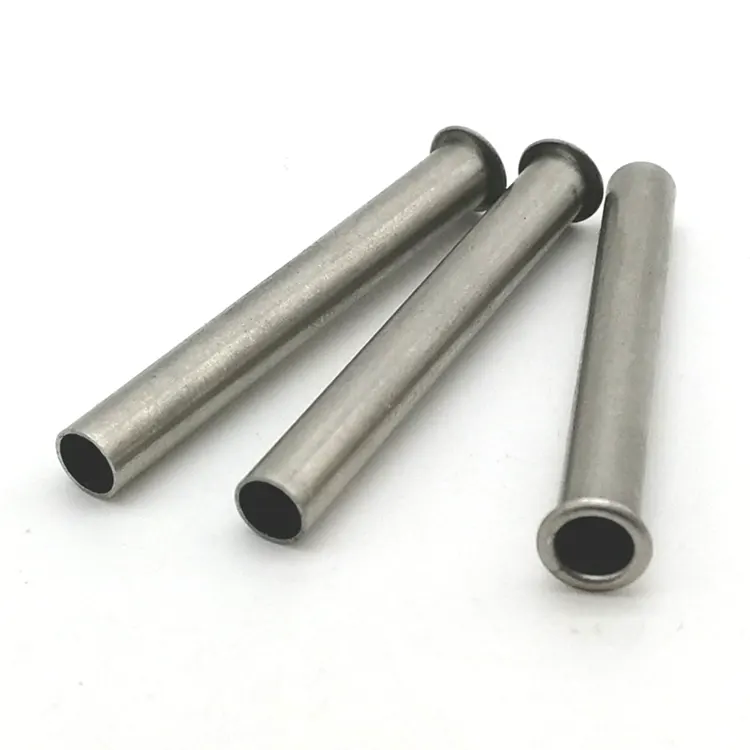
As one of professional manufacturer in China, Notin would like to provide you Rivets. And we will offer you the best after-sale service and timely delivery.
What is a rivet?
A rivet is a permanent mechanical fastener used to join two or more materials. Rivets work by inserting a metal pin into an aligned hole and deforming the end, creating a strong, secure, and durable connection. Unlike temporary fasteners like screws, rivets do not rely on threads, but instead form a permanent connection, making them ideal for applications requiring high strength, durability, and vibration resistance.
Classification of Rivets
Rivets are typically categorized by head shape, degree of hollowness, or material.
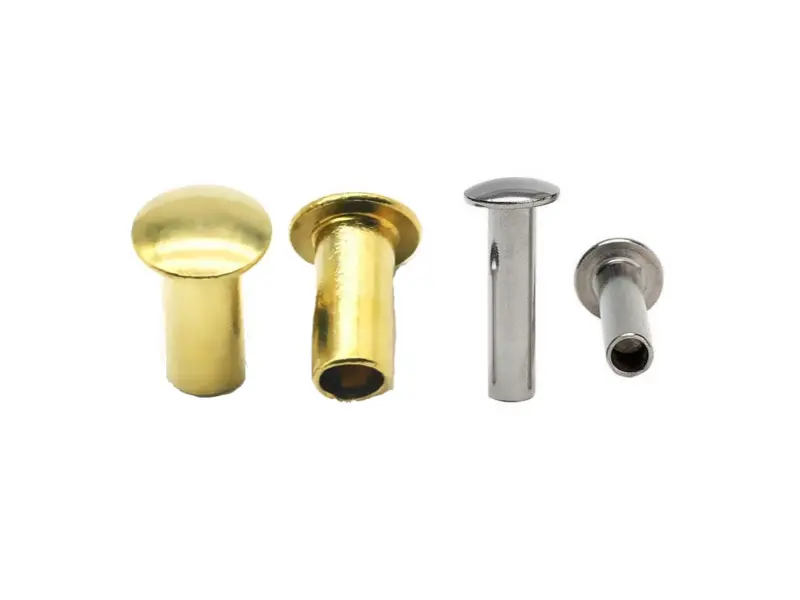
Based on head shape, rivets can be classified as flat head rivets, round head rivets, countersunk head rivets, mushroom head rivets, universal head rivets, truss head rivets, etc.
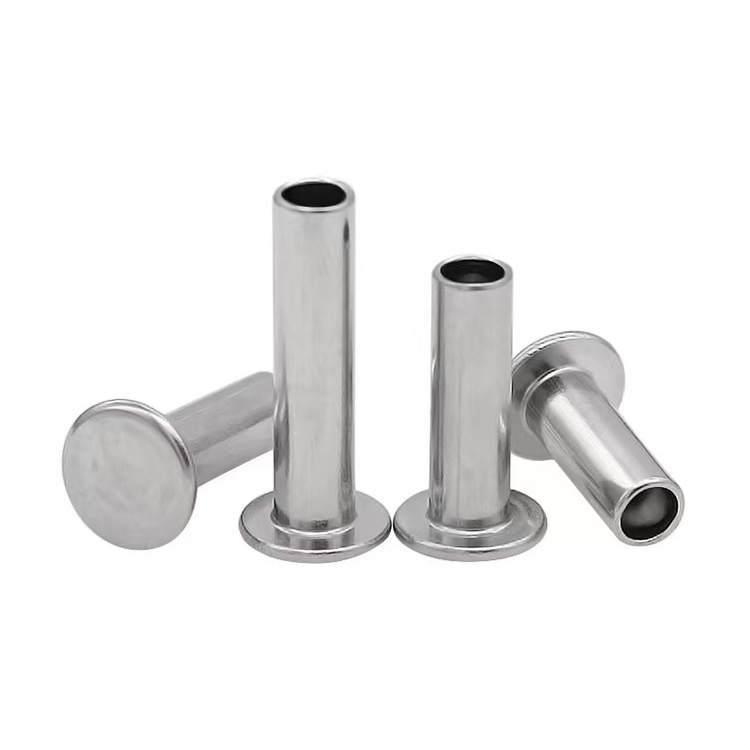
Based on degree of hollowness, rivets can be classified as solid rivets, semi-tubular rivets, or full tubular rivets.
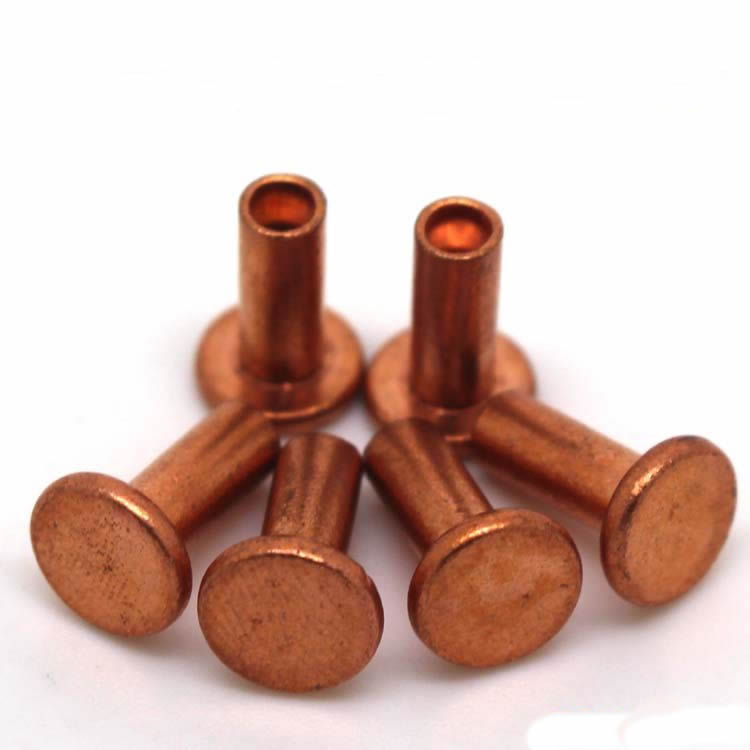
Based on material, rivets can be classified as brass rivets, stainless steel rivets, steel rivets, aluminum rivets, copper rivets, etc.
Rivet surfaces are typically treated with rust-proofing treatments, primarily electroplating, including zinc plating, nickel plating, chrome plating, tin plating, gold plating, and silver plating. Electroplating is a common rust-proofing method for rivets. It applies a layer of plating to the rivet surface through physical or chemical methods. The plating effectively prevents corrosion and rust, while also providing a certain aesthetic effect.
Another special surface treatment method is head coating. Head coating is performed after the rivet is electroplated. This allows for a variety of colors on the rivet head, achieving an aesthetically pleasing finish.
Aluminum rivets cannot be electroplated, but they can be anodized. Anodizing also allows for a variety of color options, but the unit price is higher than electroplating.
Rust-proofing the rivet surface is crucial, effectively extending the rivet's service life and ensuring a secure connection. Different rust-proofing methods are suitable for different environments and applications, so the choice should be tailored to the specific situation.
Nuote Metals はリベットの専門メーカーです。高精度で切断面が平坦で、表面が滑らかで見た目にも美しいリベットを製造します。ステンレス鋼リベットは一般的な金属ファスナーで、主に特殊な接続または高強度の接続用途に使用されます。シャンクとキャップで構成されています。外力によりシャンクが変形し、複数のワークを強固に結合します。これらのリベットは高い引張強度とせん断強度を備えているため、さまざまな産業用途での使用に適しています。
続きを読むお問い合わせを送信Nuote Metals は中国の信頼できるリベット メーカーで、真鍮、鉄、アルミニウム、ステンレス鋼、銅などのさまざまな素材のリベットを製造しています。ステンレス鋼製ナベリベットは、優れた締結特性、優れた耐食性、多様な仕様、幅広い用途により、多くの業界にとって理想的な選択肢です。工業製造、建築装飾、自動車製造、または家庭用 DIY のいずれにおいても、ステンレス鋼製ナベリベットは信頼性の高い接続ソリューションを提供し、あらゆるプロジェクトにセキュリティ層を追加します。
続きを読むお問い合わせを送信Nuote Metals は、ステンレス製のキノコ頭リベットの製造を専門としています。当社のステンレススチールリベットは、輝く仕上げを誇ります。原材料の保管から生産、出荷に至るまで、当社は各リベットを完璧な外観と寸法でお客様にお届けできるよう、細部に至るまで厳密に管理しています。ステンレス鋼製のキノコ型リベットは耐食性があり、強力な機械的特性を備えています。これらは、かばん、アパレル、産業機器などのリベット留め用途に広く使用されています。
続きを読むお問い合わせを送信Nuote Metals はステンレス鋼の平頭リベットの製造を専門としています。材質はSUS304またはSUS316Lを使用しており、表面は傷がつきにくく滑らかです。寸法は顧客の図面に厳密に従っており、当社の品質検査部門は外観と寸法の両方を厳密に検査して、各リベットが顧客の仕様を満たしていることを確認します。ステンレス鋼製平頭リベットは主に、耐食性、高温耐性、高強度で知られる合金であるステンレス鋼で作られています。これにより、これらの平頭ステンレス鋼リベットは、湿気、酸性、またはアルカリ性の環境でも安定した状態を保ち、錆びたり変形したりしにくくなります。
続きを読むお問い合わせを送信ステンレス鋼皿頭リベットは、耐食性と耐久性を確保するためにステンレス鋼で作られています。一般的なステンレス鋼材料には 304 および 316 があり、使用される特定の材料は特定の用途環境および要件によって異なります。 Nuote Metals は、平頭ステンレス鋼リベット、ドーム頭ステンレス鋼リベット、マッシュルーム頭ステンレス鋼リベット、なべ頭ステンレス鋼リベットなど、さまざまな頭形状のステンレス鋼リベットの製造を専門としています。ご質問をお待ちしております。
続きを読むお問い合わせを送信1. Ease of Installation
Rivets are fast to install, and even fully automated for high-volume applications, resulting in a simple and efficient operation process.
2. Connection Reliability
The riveting process is standardized, with strict quality control, resulting in highly stable connections. Visual inspection allows for quick verification of connection quality.
3. Vibration and Impact Resistance
Rivets connect through deformation or interference fit, providing strong clamping force and excellent vibration resistance, capable of withstanding vibration and shock.
4. Low Cost
Rivets are easy to install and can be fully automated, saving significant labor costs.
Aluminum Rivets
Advantages: Lightweight, reduces overall product weight, low cost, suitable for general civilian applications.
Disadvantages: Low tensile and shear strength, unsuitable for high-strength workpieces, prone to electrochemical corrosion when in contact with metals such as stainless steel.
Stainless Steel Rivets
Advantages: Strong corrosion resistance, high hardness, suitable for high-strength workpieces (such as marine equipment)
Disadvantages: Higher cost, typically more expensive than aluminum rivets of the same specification.
Brass and Copper Rivets
Advantages: Excellent conductivity (such as connecting electronic components), good corrosion resistance.
Disadvantages: Higher cost, more difficult to process.
Steel Rivets
Advantages: High hardness, high connection reliability, and wide applicability.
Disadvantages: Compared to other materials, iron rivets are more prone to rusting.
Rivets have a wide range of uses, from small items like a pair of scissors to large items like airplanes and ships, as well as in high-precision medical applications.
Industrial Manufacturing
Rivets are used in a wide variety of industrial fields, wherever there is a need to connect two or more materials.
Electronics
Rivets secure heat sinks and chips, providing both vibration damping and noise reduction, and are widely used in the cooling systems of electronic products such as computers and mobile phones.
Automotive
Rivets are widely used to connect components of automobile bodies and chassis, such as doors and hoods. Their lightweight and corrosion-resistant properties make them an indispensable joining method in automotive manufacturing.
Aerospace
In aircraft manufacturing, rivets are used to connect different fuselage components, such as wings and tailplanes. Millions of rivets create high-strength, corrosion-resistant joints. Aluminum and titanium alloy rivets are often used to connect components of corresponding materials, ensuring stability in extreme environments.
Rivets are used everywhere. The above examples only represent a small number of their applications. We see rivets everywhere in our daily lives, such as on scissors, folding beds, and strollers etc. Rivets can be customized to different sizes and materials depending on the application.
Nuote Metals has specialized in the rivet industry for over a decade. Our factory is located in Dongguan, a city known as the "World Factory," a city with a developed industry and convenient transportation. This allows us to respond quickly when acquiring raw materials and supporting surface treatments, meeting our customers' needs for quick access to samples and bulk orders. We produce 10 million rivets daily and have molds of various specifications, allowing us to produce rivets as small as 0.8mm and as large as 10mm. We welcome your inquiries and visits.