
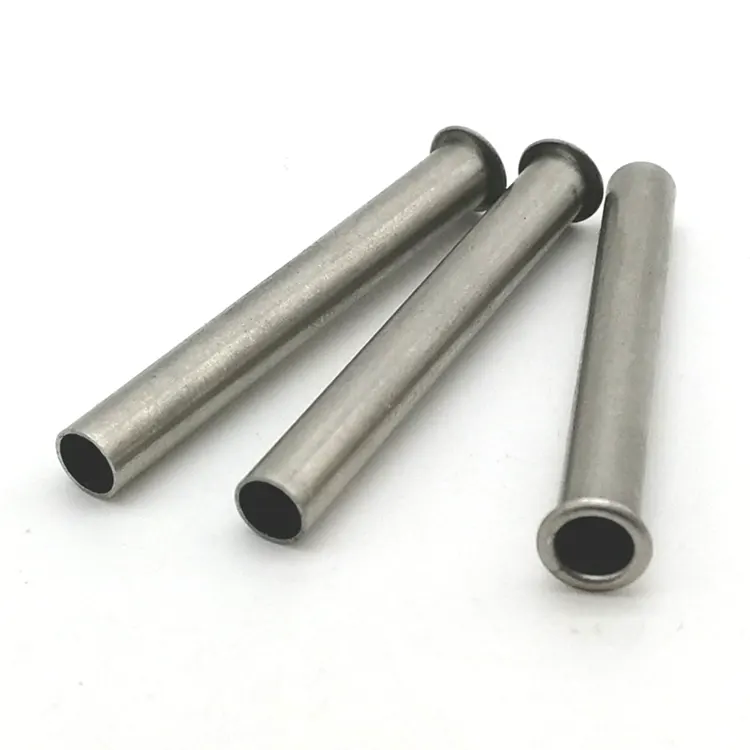
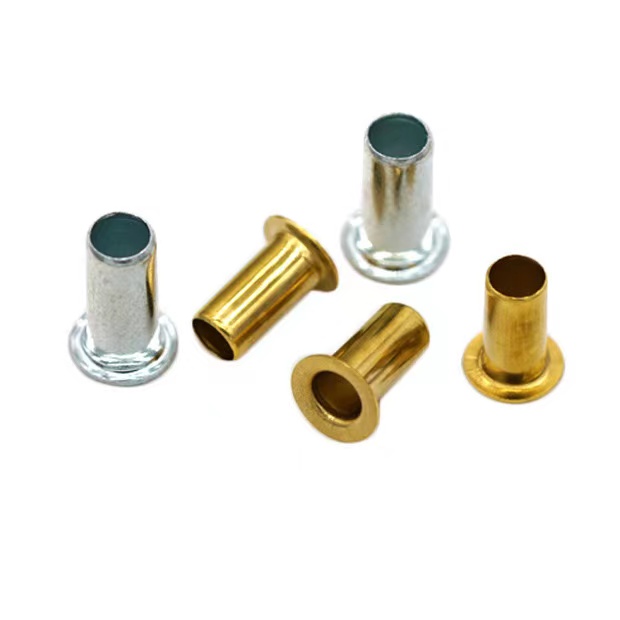
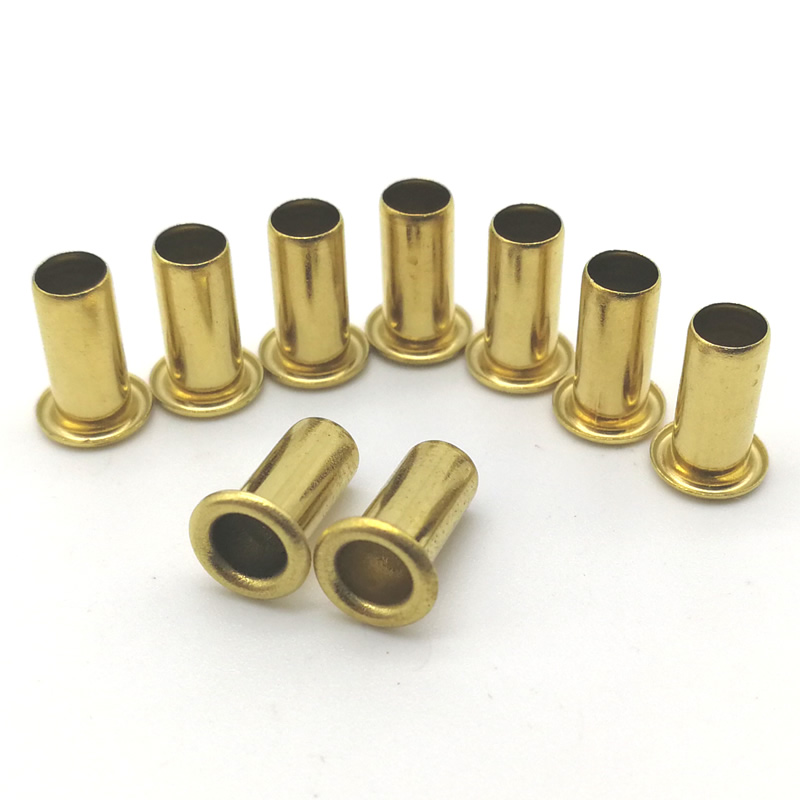
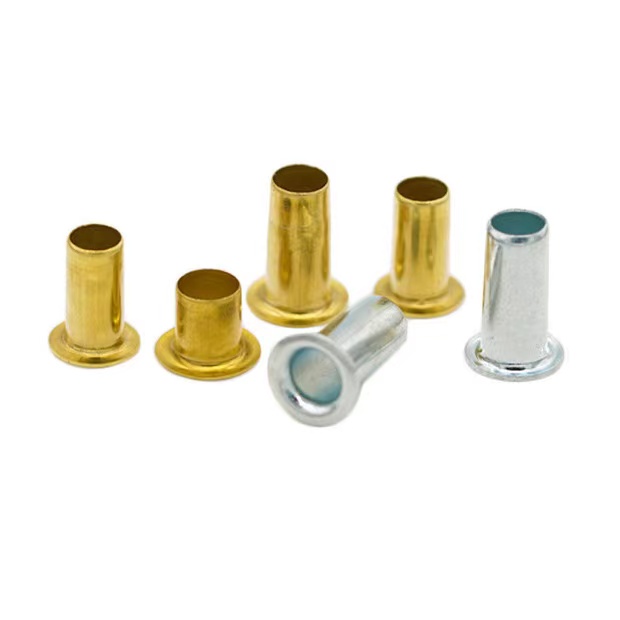
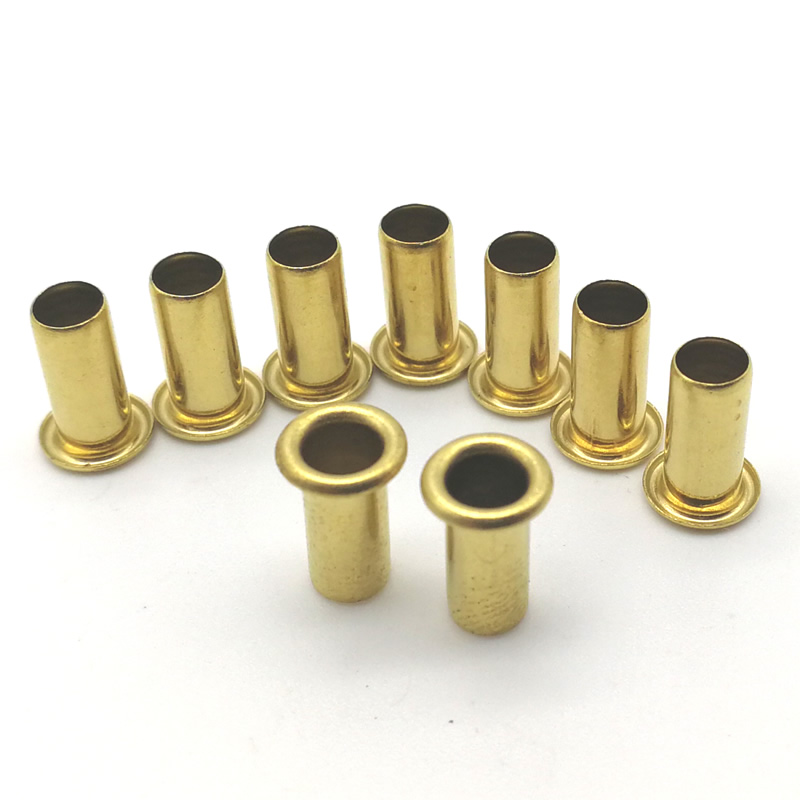
パンチングアイレット
信頼性の高いパンチングアイレットが必要ですか? Nuote Metals は中国の工場で、ターポリン、バナー、アウトドア用品用のカスタム パンチング アイレットを製造しています。パンチングデザインにより、生地に歪みがなくきれいな穴が開けられます。真鍮、鉄、ステンレス鋼、またはアルミニウムからお選びいただけます。素早い補強を求めるDIY愛好家やメーカーに最適です。数秒で取り付けられるアイレットでエッジの破れを解決します。一貫したサイジングと迅速な納品を実現する当社を信頼してください。
お問い合わせを送信
製品説明
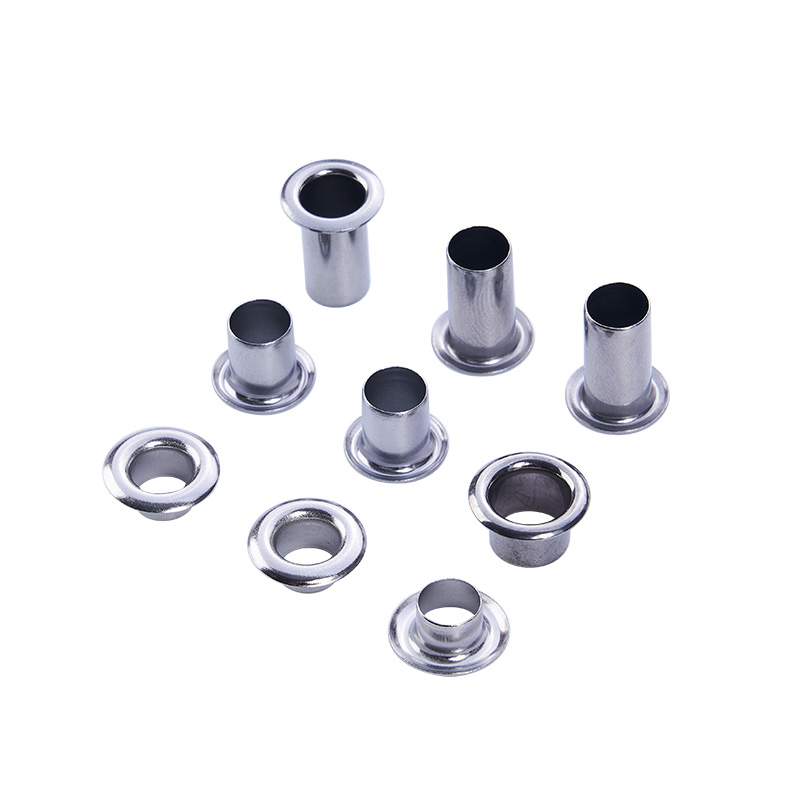
For reinforcing holes in fabric, leather, or thin sheet metal, this component offers a simple, permanent solution. Unlike drawn or tubular alternatives, a punched eyelet is formed by extruding a barrel from a flat disc—resulting in a seamless, burr-free part suitable for high-volume assembly.
Nuote Metals follows a strict seven-step manufacturing protocol for every order, from material sourcing to final inspection. This guide details our process, material options, dimensional data, and transparent quality policies.

Real-World Applications
Case 1 – Toy Knife Decorative Accents (ABS Plastic, Brass Punched Eyelet)
A children’s toy manufacturer wanted to add a realistic, premium look to their play knife series. The design called for small metal dots around the blade and handle to mimic the appearance of rivets on a real tool. These accents were purely decorative—not load‑bearing. The requirements were: shiny, child‑safe, easy to install, and secure enough to survive hard play.
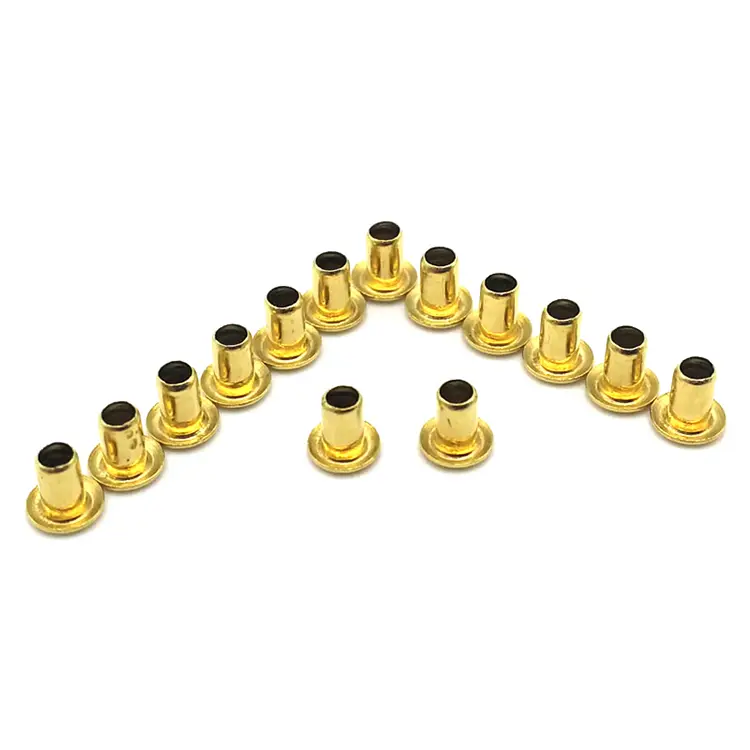
We supplied brass punched eyelet components (3mm inner diameter, 6mm outer flange, 2mm short barrel length, lacquered finish). The shallow barrel allowed the eyelet to sit nearly flush against the ABS surface. The bright brass finish gave the toy a high‑end, “authentic” look. Because the punched eyelet has no sharp burrs, it passed all finger‑snag safety tests. We recommended a simple heat‑stake installation: warm the eyelet slightly and press it into a pre‑molded recess. After 10,000 drop and impact cycles, none of the decorative eyelets had loosened or fallen out. The customer now uses our brass punched eyelets across four toy models as a signature design element.
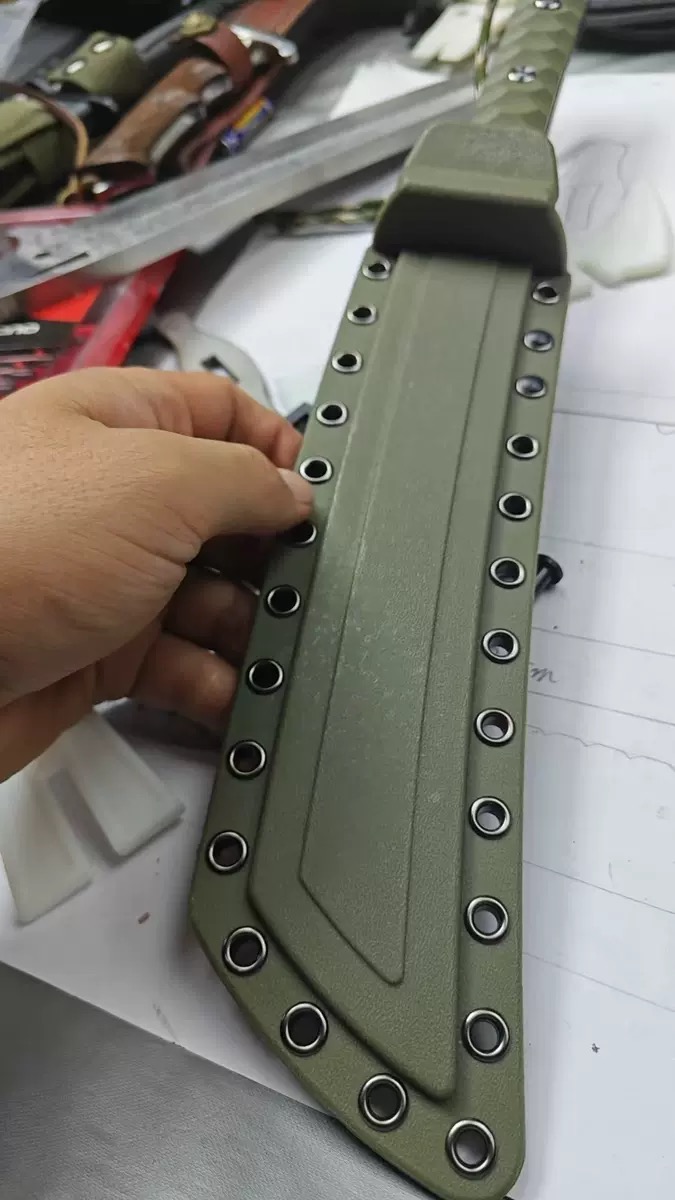
Case 2 – Tarpaulin Tie‑Down Point
An industrial tarpaulin maker needed a corrosion‑resistant eyelet for heavy‑duty truck covers exposed to road salt and rain. The previous aluminum eyelets deformed under high tension and corroded after one winter. They required a stronger, rust‑proof solution that could withstand 200 kg pull force.
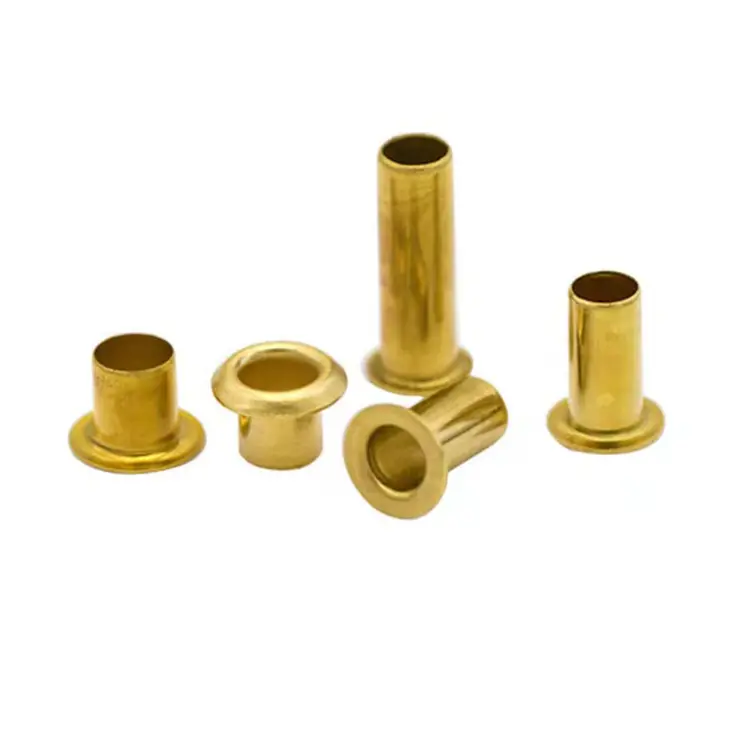
We recommended brass punched eyelet parts (8mm inner diameter, 15mm outer flange, 8mm barrel length, lacquered finish). The brass material offered excellent corrosion resistance in outdoor conditions while remaining easy to set. The punched eyelet’s seamless barrel rolled firmly against the PVC fabric, preventing pull‑through. The wide brass flange distributed load evenly, eliminating deformation. After two years of field use across 5,000 tarpaulins, zero failures were reported. The customer has since converted all heavy‑duty covers to our brass punched eyelets.
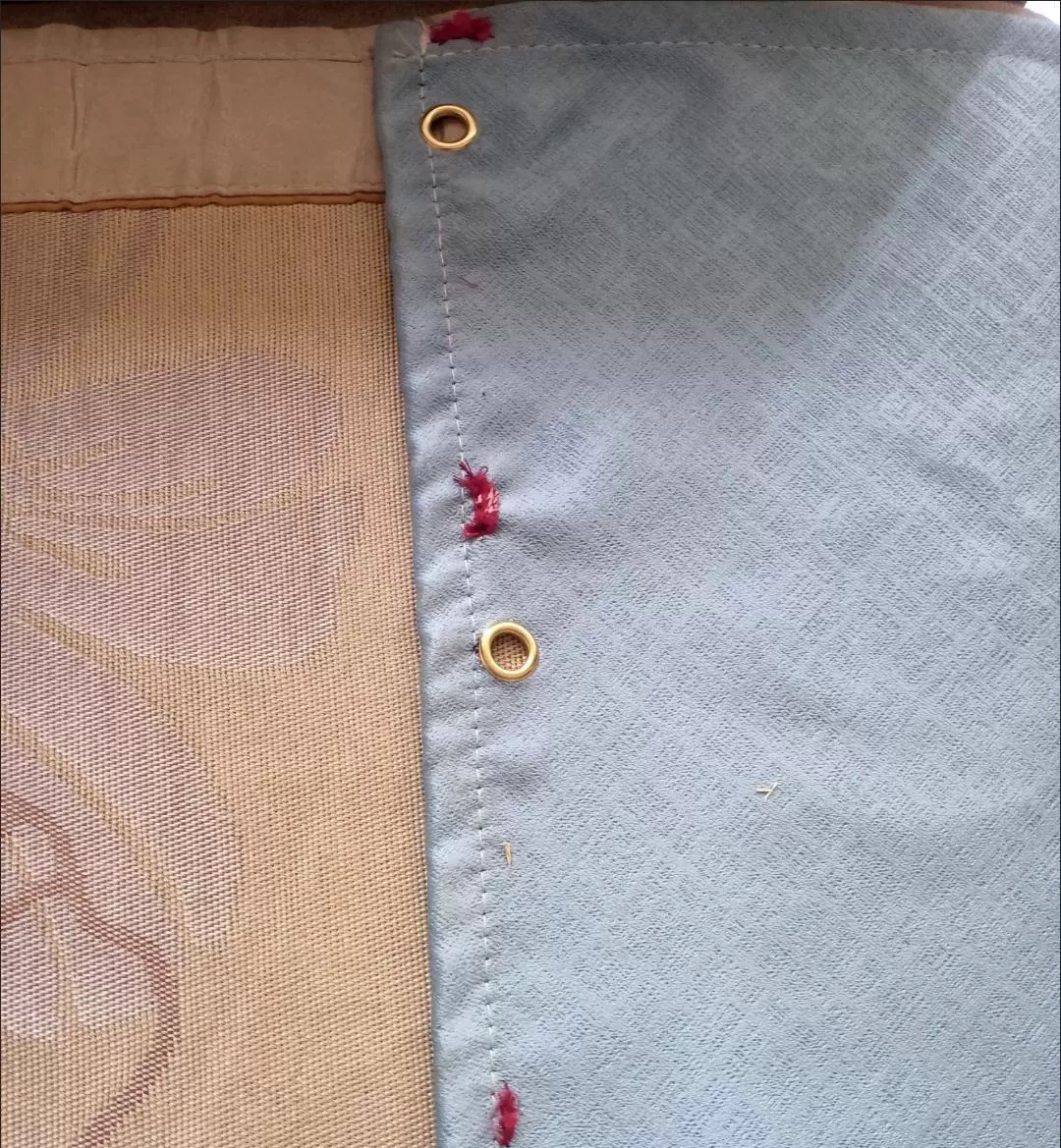
Different Kinds of Eyelets We Can Make
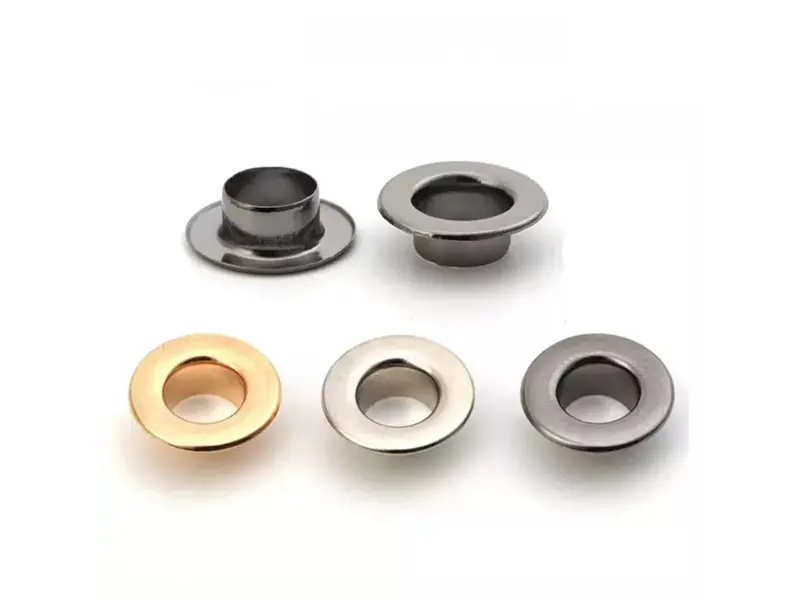
Nuote Metals produces different kinds of eyelets, such as brass eyelets, steel eyelets, stainless steel eyelets,aluminum eyelets ,copper eyelets and special eyelets.
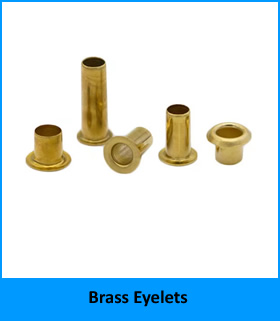
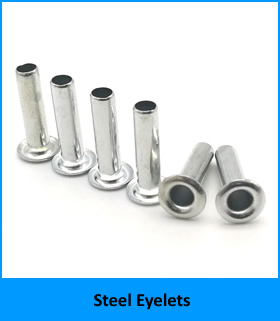
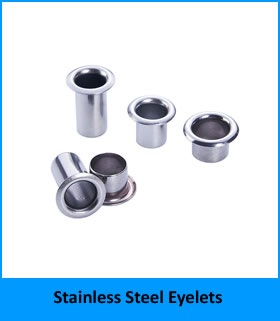
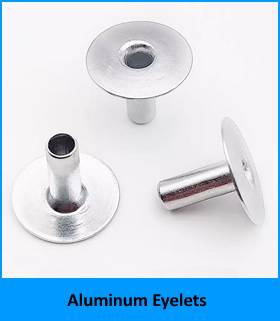

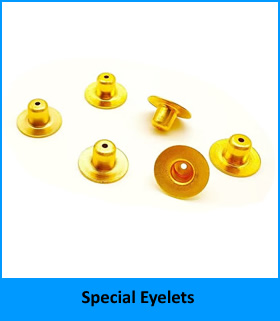
Technical Parameters – Materials and Dimensions
We offer these eyelets in four material families.
Material Options
| Material | Grades | Typical Finish | Corrosion Resistance |
|---|---|---|---|
| Brass | C26000 | Lacquered, antique, nickel | Good (indoor/marine) |
| Low-carbon steel | SPCC, Q195 | Zinc plated (clear/blue/yellow) | Moderate to good |
| Aluminum | 5052, 1100 | Clear or color anodized | Good (salt spray 100+ hrs) |
| Stainless steel | 304, 316 | Passivated, bead blasted | Excellent (marine/chemical) |
Standard Dimensional Range
| Inner Dia (mm) | Outer Flange (mm) | Barrel Length (mm) | Grip Range (mm) |
|---|---|---|---|
| 3.0 | 6.0 – 6.5 | 3,4,5 | 1.0 – 3.5 |
| 4.0 | 7.5 – 8.0 | 4,5,6 | 1.5 – 4.5 |
| 5.0 | 9.0 – 10.0 | 5,6,7 | 2.0 – 5.5 |
| 6.0 | 10.5 – 11.5 | 6,7,8 | 2.5 – 6.5 |
| 8.0 | 13.5 – 15.0 | 7,8,10 | 3.0 – 8.0 |
| 10.0 | 16.0 – 18.0 | 8,10,12 | 3.5 – 10.0 |
Actually we have more than 3000 different sizes of eyelets in stock, here are just listed a few sizes.
Seven-Step Production Process
We follow this workflow for every batch.
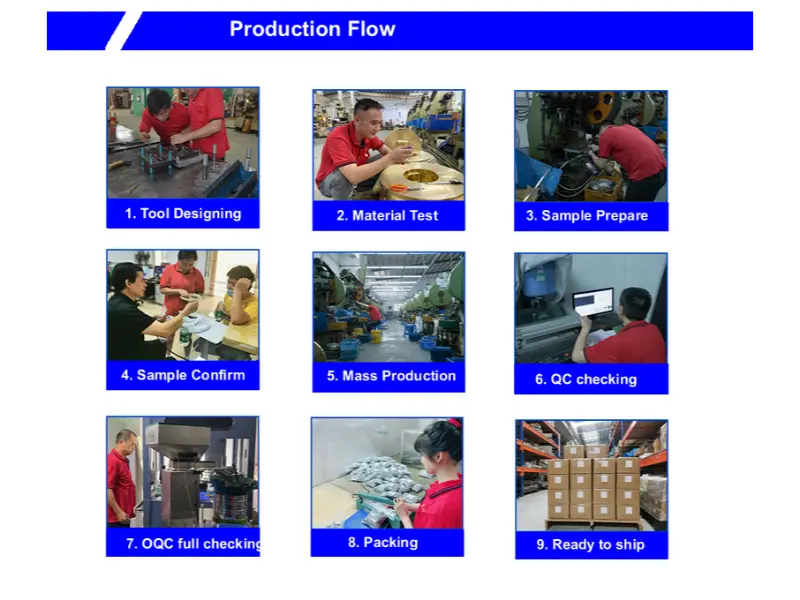
Step-by-Step from Raw Material to Finished Part
2. Material Inspection – Incoming coils are tested using a spectrometer to verify chemical composition. Thickness is checked with a laser micrometer.
3. Tooling Customization or Setup – For new dimensions, we design and machine carbide progressive dies (lead time 15–25 days). For standard sizes, our technicians install and align the existing die.
4. First Article Inspection – The press runs 20–50 sample pieces. Our QA team measures every dimension (ID, OD, barrel length, flange thickness). Samples are sent to the customer for approval.
5. Mass Production – Upon approval, the press runs at 200–600 strokes per minute, producing up to 30,000 components per hour. In-process checks occur every 2,000 pieces.
6. Subcontracted Plating (if required) – For steel or brass parts requiring zinc, nickel, or antique finishes, we send batches to our certified plating partners. Plating thickness is verified by XRF.
7. Final Outgoing Inspection – Finished batches are 100% optically sorted for critical dimensions. A random sample (AQL 1.0) is pulled for full dimensional and pull-test verification. A Certificate of Conformance is issued with each shipment.
This seven-step workflow ensures that every punched eyelet leaving our factory meets the tolerances and material properties we promise.
View our vedio to know how we make eyelets
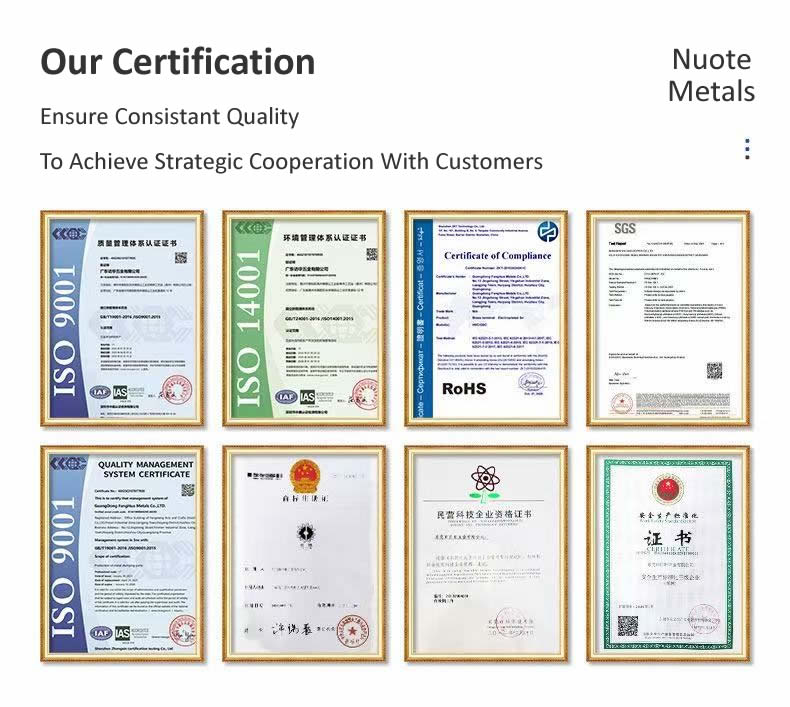
Quality Assurance and Certifications
We maintain the following for each batch:
- Certification Scope
- ISO 9001:2015 Full quality management system
- RoHS (2011/65/EU) Lead, cadmium, mercury limits (SGS tested)
- REACH SVHC declaration (current list)
- Conflict minerals DRC-free declaration
Each shipment includes a mill test certificate, dimensional inspection report, plating thickness certificate (if applicable), and a signed Certificate of Conformance.
Transparent Policies
- Sample policy – 20 free pieces for any standard size (customer pays shipping)
- Minimum order quantity – 2,000 pieces for steel/brass; 5,000 for stainless/aluminum
- Lead time – 5–7 business days for stocked sizes; 12–15 days for custom finishes
- Tooling charges – None for standard IDs and barrel lengths
- Return policy – Defective parts replaced at no cost
Nuote Metals does not charge for requalification or re-sampling when tolerances are not met.
Frequently Asked Questions
Q1: What is the difference between a punched eyelet and a tubular rivet?
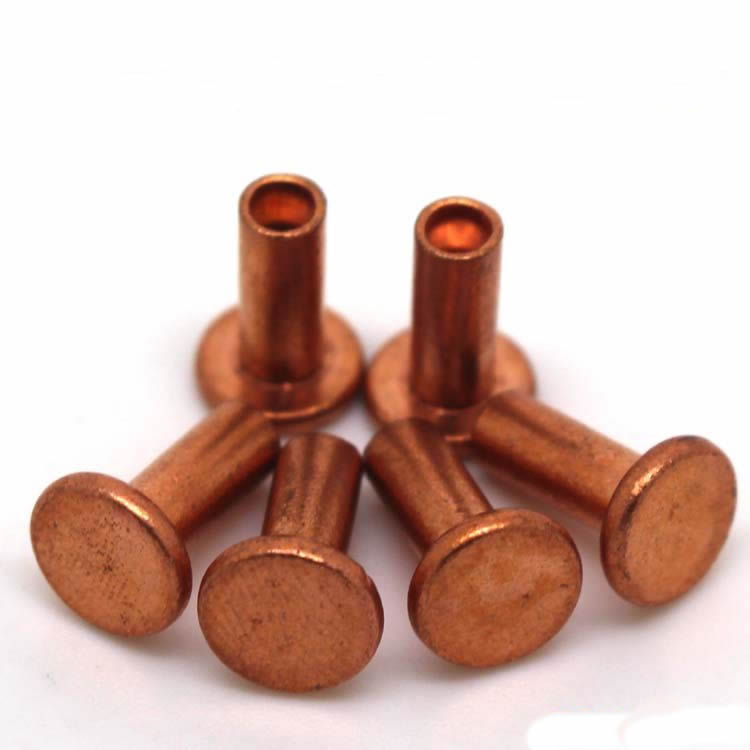
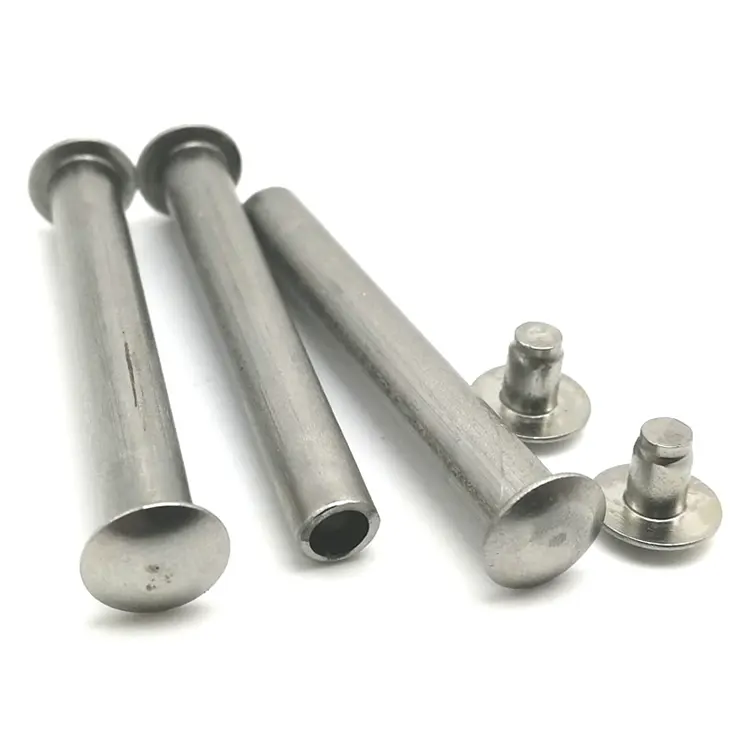
A: The main difference lies in how each is made. Our punched eyelet (also called a deep drawn eyelet) is formed from a flat metal sheet through a progressive deep drawing process: we punch a blank, then draw it into a cup, and finally pierce the bottom to create the hole. This results in a seamless, one-piece component with a smooth barrel and no joints. A tubular rivet, by contrast, starts from a metal tube (seamless or welded). The tube is cut to length, then one end is rolled or headed to form the flange. Because it uses pre-made tubing, a tubular rivet may have a visible seam (if welded) and typically has a thinner wall than a drawn eyelet of the same diameter. For applications requiring a clean, burr-free bore and maximum pull-out resistance in soft materials (leather, fabric, plastic), we recommend our punched eyelet. For high-volume, low-cost metal-to-metal fastening where a visible seam is acceptable, a tubular rivet may suffice.
Q2: Can stainless steel punched eyelet components be made without cracking?
A: Yes, but with specific controls. Stainless steel (especially 304) work hardens rapidly during extrusion. We use polished carbide forming punches and multi-stage extrusion (three light hits instead of one heavy hit) to prevent cracking. A high-performance chlorine-free lubricant is also applied. For barrel length greater than 1.5× ID, we recommend intermediate annealing or switching to 316 stainless. Our internal rejection rate for stainless versions is 0.6%—below the industry average.
Q3: How do I select the correct barrel length for a punched eyelet when the material stack includes foam or padding?
A: Measure the stack thickness under actual clamping pressure (not at rest). Then select a barrel length that exceeds that compressed thickness by 1.0–1.5mm. For example, if foam compresses from 5mm to 2mm under 2 kg/cm², use a barrel length of 3.0–3.5mm. Nuote Metals offers sample kits containing multiple barrel lengths so you can test clinch formation on your actual material. We also provide a free grip range calculator—send us your material stack details for a recommendation.
Why Choose Us
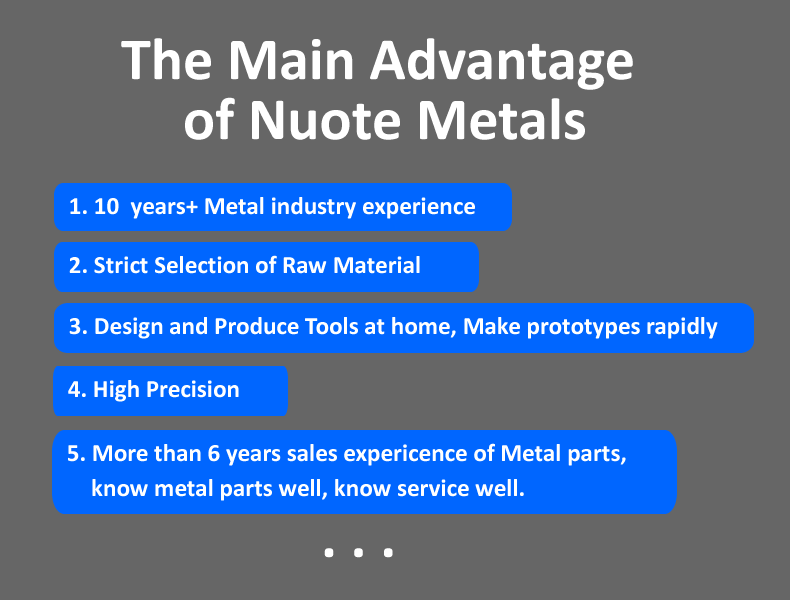
- Four material families – brass, steel, aluminum, stainless (304/316)
- In-house tooling – no external die charges for standard sizes
- 100% optical sorting – eliminates dimensionally non-conforming parts
- Free sample program – test fit before ordering production quantities
- Full traceability – MTC, CoC, and plating reports with every order
Contact Nuote Metals today to request a sample pack or a compliance package.
ホットタグ: パンチングアイレット、中国アイレット工場、中国アイレット
関連カテゴリー
お問い合わせを送信
下記フォームよりお気軽にお問い合わせください。 24時間以内に返信いたします。






X
当社は Cookie を使用して、より良いブラウジング体験を提供し、サイトのトラフィックを分析し、コンテンツをパーソナライズします。このサイトを使用すると、Cookie の使用に同意したことになります。
プライバシーポリシー