
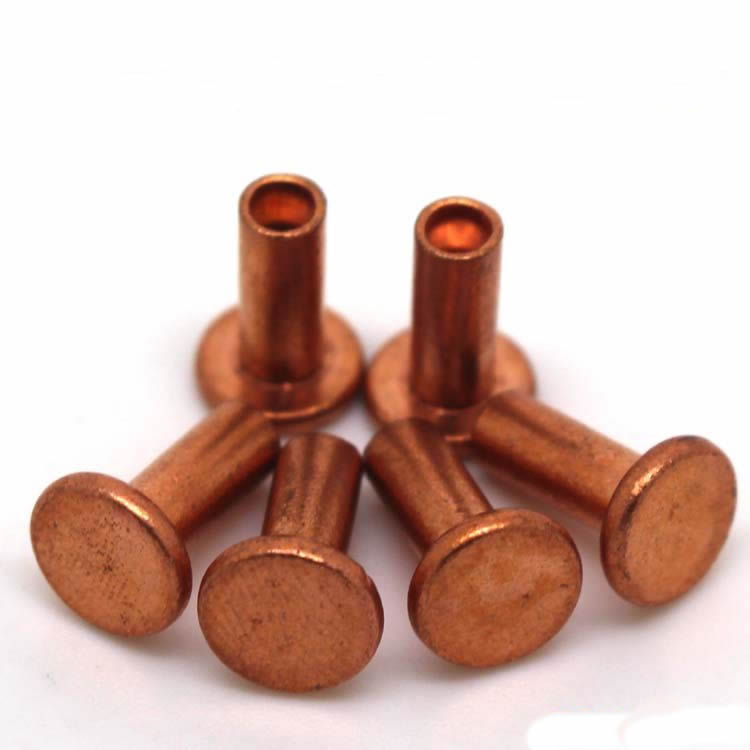
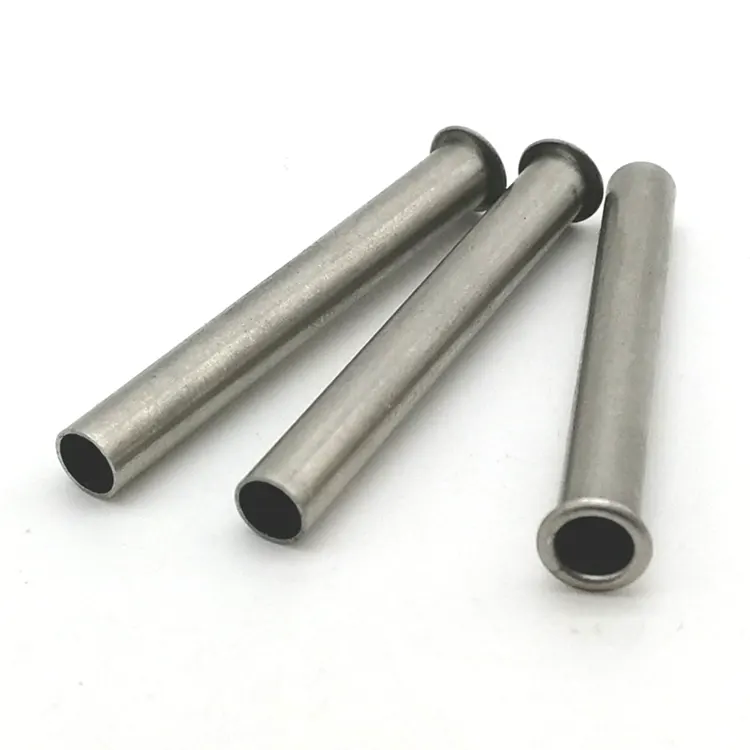
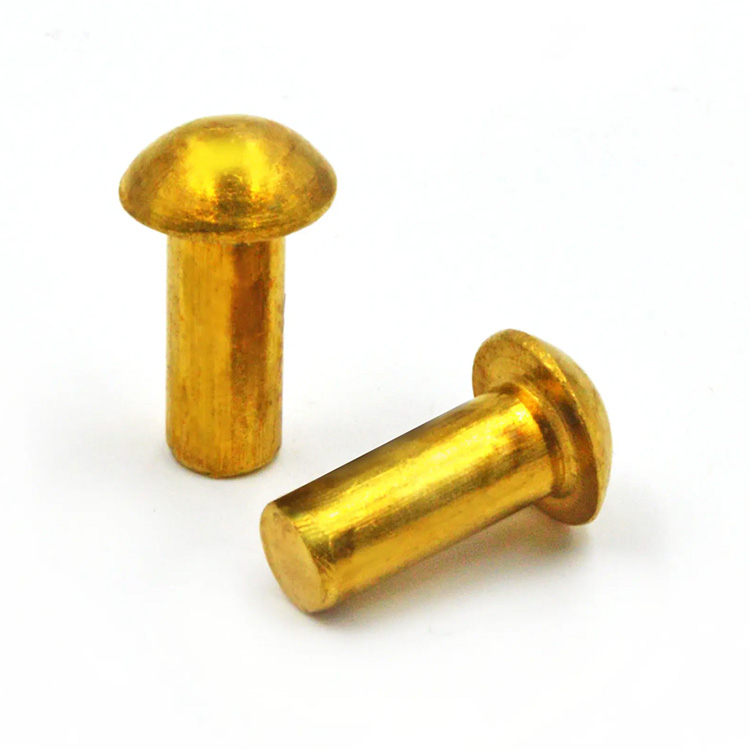
真鍮ソリッドリベット
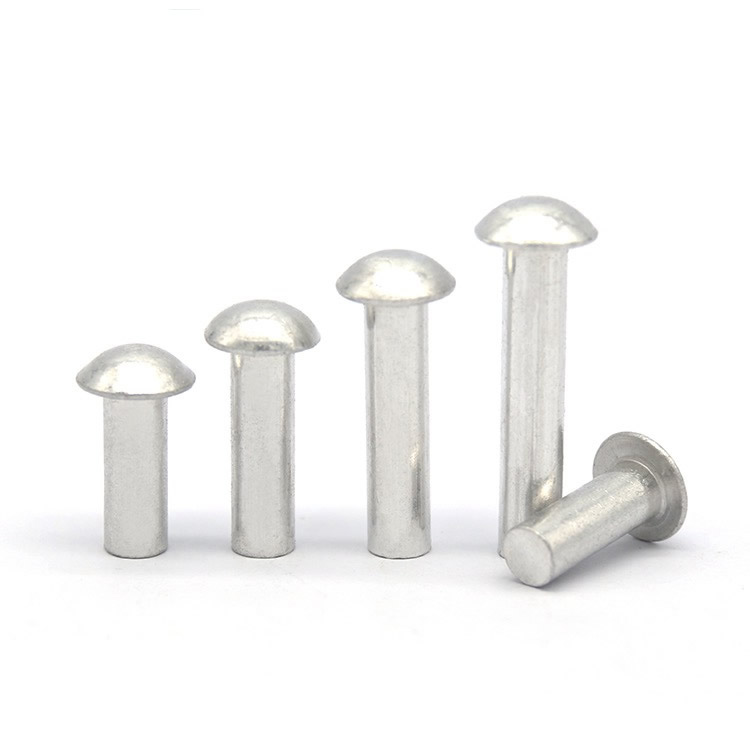
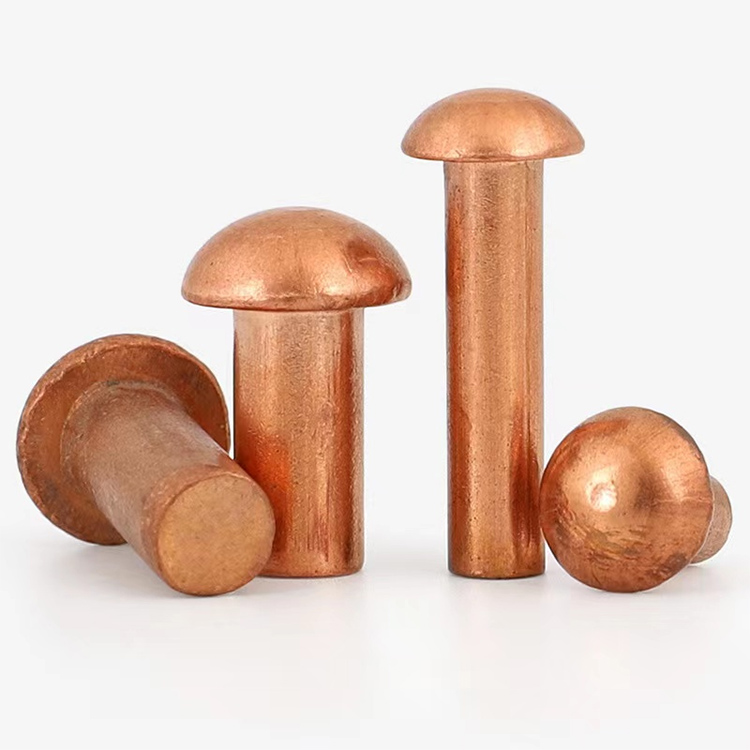
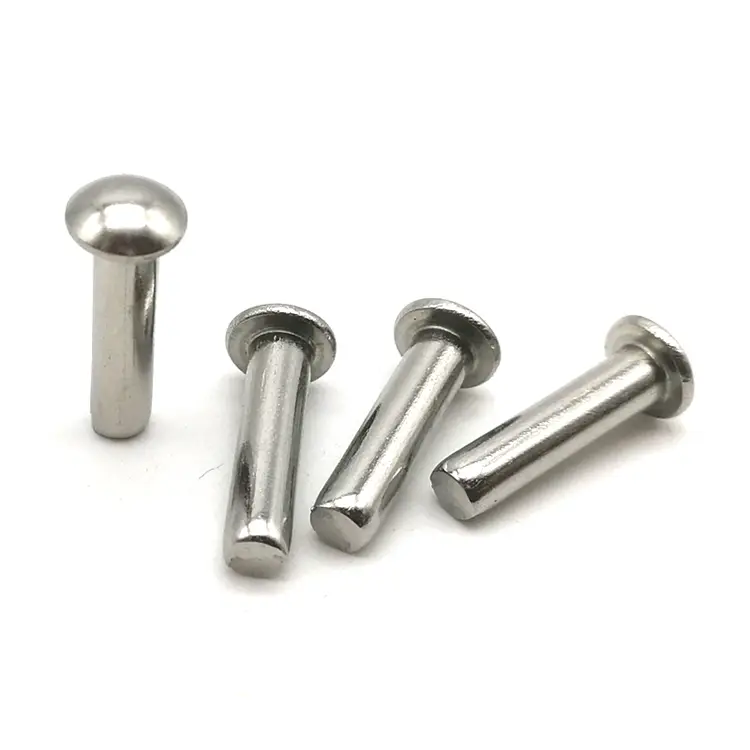
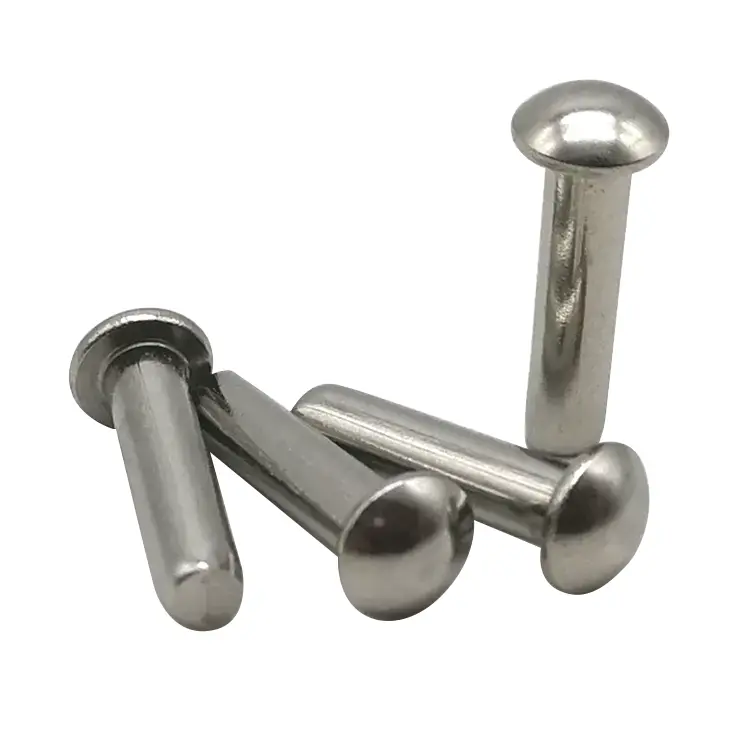
接合部が絶対に外れてはいけない場合、Nuote Metals は真鍮製の最強の永久固定ソリューションである真鍮製ソリッド リベットを提供します。 C2680 高硬度イエローブラスで作られた当社のソリッド リベットは、半管状リベットでは十分な保持力を提供できない構造アセンブリ、電気接続、および高負荷用途に最大のせん断強度と引張強度を提供します。シャンク径は 0.8 ~ 8.0 mm で、丸頭、平頭、楕円頭、皿頭が用意されています。 ISO9001:2015認証取得。無料サンプルをご利用いただけます。見積もりについてはお問い合わせください。
お問い合わせを送信
製品説明
A solid rivet is the original permanent fastener—no threads, no moving parts, just a single piece of metal that, once set, stays put for the life of the assembly. Brass solid rivets take this classic design and add the benefits of brass: excellent electrical conductivity, natural corrosion resistance, and a warm gold appearance that ages gracefully.
Nuote Metals cold-heads brass solid rivets from C2600 and C2680 brass alloys. Unlike semi-hollow rivets, solid rivets have no cavity—they rely entirely on the deformation of the full shank to form the clinch. This makes them stronger and more reliable for permanent, load‑bearing joints where disassembly is never required.
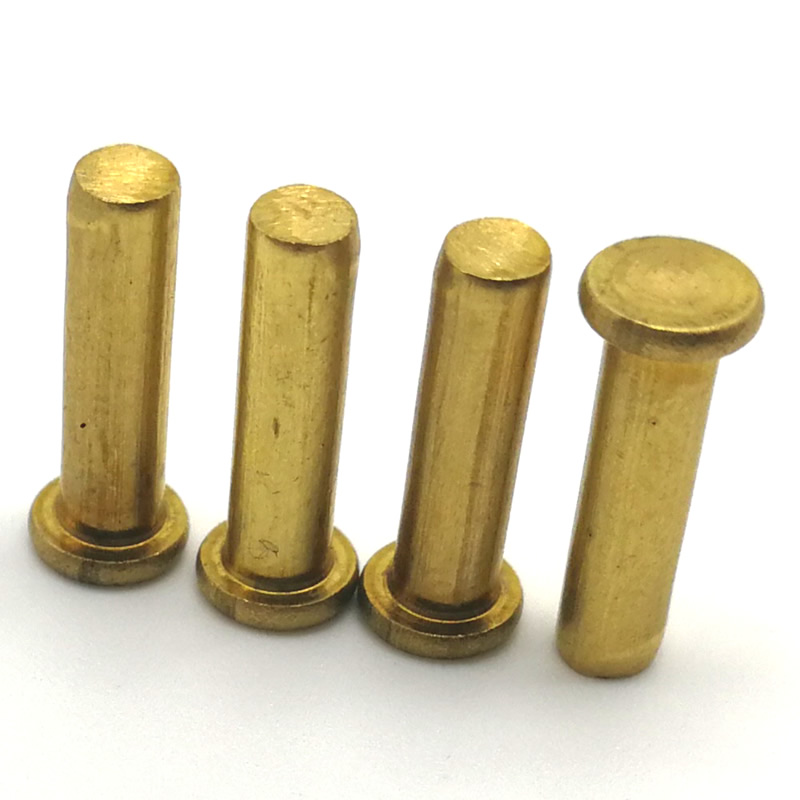
What Are Brass Solid Rivets?
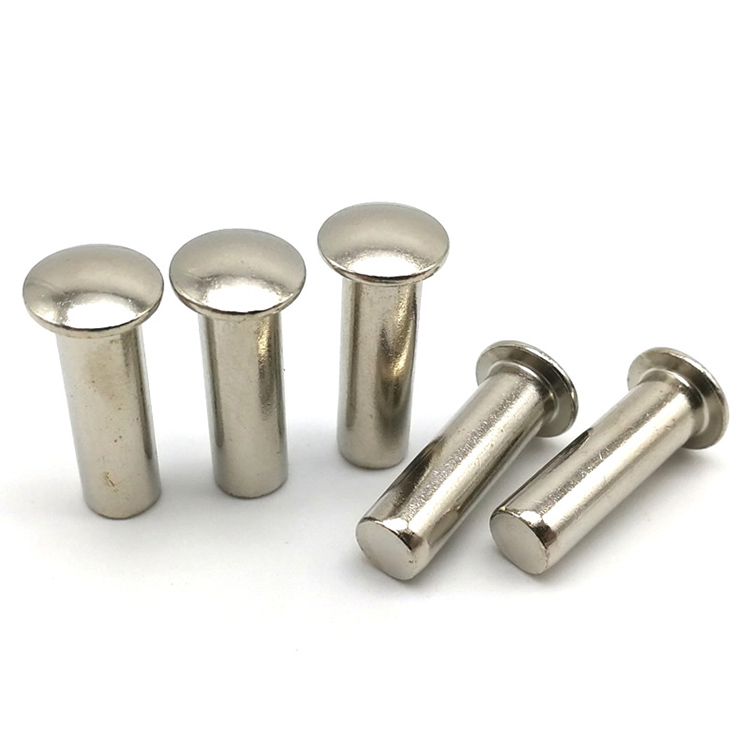
Brass solid rivets are one‑piece fasteners with a pre‑formed head on one end and a solid shank on the other. During installation, the plain end is upset (deformed) using a rivet gun or press, forming a second head that locks the assembly together permanently.
They serve three primary functions:
- Permanent joining – Once set, they cannot be removed without destroying the rivet
- Electrical conductivity – Brass provides reliable current transfer in electronic applications
- Aesthetic finishing – The warm gold colour adds value to visible assemblies
Because they are solid (not hollow), brass solid rivets offer maximum shear and tensile strength. They are the preferred choice for structural joints, high‑vibration environments, and applications where a hollow rivet would not provide enough strength.
Why Choose Brass for Solid Rivets?
Brass is an alloy of copper and zinc, offering a unique combination of properties that make it ideal for solid rivets:
| Property | Benefit |
|---|---|
| Electrical conductivity | Reliable current transfer for grounding and electronic connections |
| Corrosion resistance | Natural resistance to rust and tarnish; develops a protective patina |
| Cold formability | Easy to head and upset without cracking |
| Aesthetic appeal | Warm gold colour; available in multiple finishes |
| Non‑magnetic | Suitable for electronic and sensitive applications |
We offer brass solid rivets in two primary alloys:
| Alloy | Composition | Key Characteristics |
|---|---|---|
| C26000 (Cartridge Brass) | ~70% Cu, ~30% Zn | Excellent ductility, standard choice for general rivet production |
| C2680 (Yellow Brass) | ~65% Cu, ~35% Zn | Higher hardness and wear resistance; ideal for high‑wear applications |
Technical Specifications – Materials, Dimensions, and Head Styles
Material Properties
| Property | C26000 | C2680 |
|---|---|---|
| Tensile strength (MPa) | 315 – 390 | 370 – 440 |
| Hardness (HRB) | 60 – 75 | 70 – 85 |
| Electrical conductivity (% IACS) | ~28% | ~26% |
| Elongation | 40 – 60% | 30 – 50% |
Standard Dimensions – Round Head
| Shank Diameter (mm) | Head Diameter (mm) | Head Height (mm) | Overall Lengths (mm) |
|---|---|---|---|
| 0.8 | 1.3 – 1.5 | 0.5 – 0.7 | 2.0, 3.0, 4.0, 5.0 |
| 1.0 | 1.6 – 1.8 | 0.6 – 0.8 | 2.0, 3.0, 4.0, 5.0, 6.0 |
| 1.5 | 2.4 – 2.7 | 0.9 – 1.1 | 3.0, 4.0, 5.0, 6.0, 8.0 |
| 2.0 | 3.2 – 3.6 | 1.2 – 1.4 | 4.0, 5.0, 6.0, 8.0, 10.0 |
| 2.5 | 4.0 – 4.5 | 1.5 – 1.7 | 5.0, 6.0, 8.0, 10.0, 12.0 |
| 3.0 | 5.0 – 5.5 | 2.0 – 2.2 | 5.0, 6.0, 8.0, 10.0, 12.0, 15.0 |
| 4.0 | 6.5 – 7.2 | 2.6 – 2.9 | 6.0, 8.0, 10.0, 12.0, 15.0, 20.0 |
| 5.0 | 8.0 – 9.0 | 3.2 – 3.6 | 8.0, 10.0, 12.0, 15.0, 20.0, 25.0 |
| 6.0 | 9.5 – 10.8 | 3.8 – 4.3 | 10.0, 12.0, 15.0, 20.0, 25.0, 30.0 |
| 8.0 | 12.5 – 14.5 | 5.0 – 5.8 | 12.0, 15.0, 20.0, 25.0, 30.0, 35.0 |
Tolerances: Shank diameter ±0.05mm, head diameter ±0.15mm, overall length ±0.15mm. Custom dimensions available upon request.
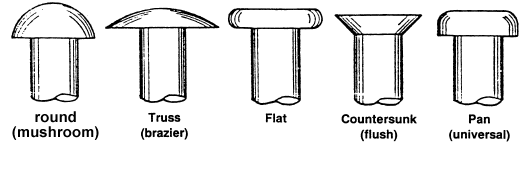
Head Styles Available
| Head Style | Head Diameter / Shank | Profile | Best For |
|---|---|---|---|
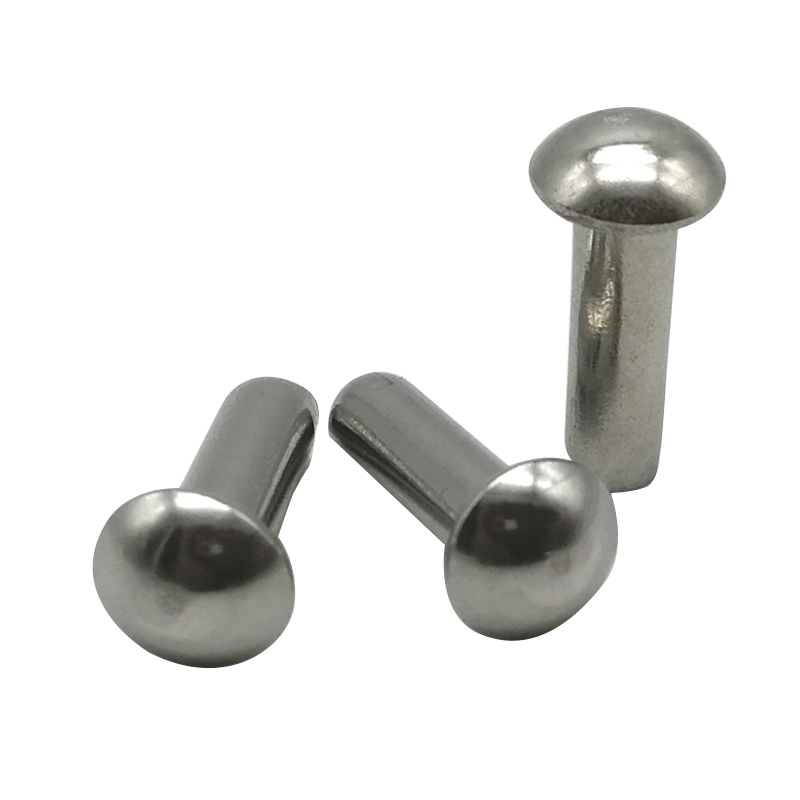
| Round | 1.6 – 1.8 : 1 | Tall dome | General purpose, visible joints, maximum head strength |
| Flat | 2.0 – 2.5 : 1 | Flat top, low profile | Clearance‑limited applications |
| Countersunk | 1.8 – 2.0 : 1 | Tapered, flush fit | Flush surface requirements, aerospace, electronics |
| Oval | 1.8 – 2.0 : 1 | Smooth, slightly raised | Decorative, leather goods |
| Mushroom | 2.2 – 2.5 : 1 | Wide, low dome | Soft materials, wide bearing surface |
Surface Finishes
| Finish | Appearance | Corrosion Resistance | Best For |
|---|---|---|---|
| Natural brass (lacquered) | Bright gold, shiny | Good (indoor) | General purpose, decorative |
| Nickel‑plated | Bright silver, modern | Excellent (96 hrs salt spray) | Electronics, visible hardware |
| Tin‑plated | Silver, matte | Good | Soldering applications |
| Silver‑plated | Bright silver, premium | Excellent | High‑end electronics, contacts |
| Antique brass | Dark, aged | Good | Vintage‑style assemblies |
Watch How We Make Brass Solid Rivets
Our cold‑heading presses form brass solid rivets from wire in a single continuous sequence—drawing, cutting, heading, and trimming. The video shows the process from wire feeding to finished rivet ejection.
One Real Customer Example – Power Distribution Busbar
This is one of many applications for brass solid rivets. We include it to show real production use, not to suggest limitation.
A manufacturer of electrical switchgear needed a reliable, high‑conductivity fastener to connect copper busbars in power distribution panels. The rivets had to carry up to 200A of current without overheating, resist corrosion in industrial environments, and provide a permanent mechanical joint that would not loosen under vibration.
Nuote Metals supplied C26000 brass solid rivets – 5mm shank, 9mm round head, 15mm overall length, natural lacquered finish. The solid construction provided maximum current‑carrying capacity. The brass alloy delivered 28% IACS conductivity. The lacquered finish prevented tarnishing in the panel environment.
The customer tested 500 rivets across 100 panels. After 5,000 thermal cycles (‑20°C to 80°C) and vibration testing, no loosening or resistance increase was measured. They now order brass solid rivets in batches of 20,000–50,000 pieces.
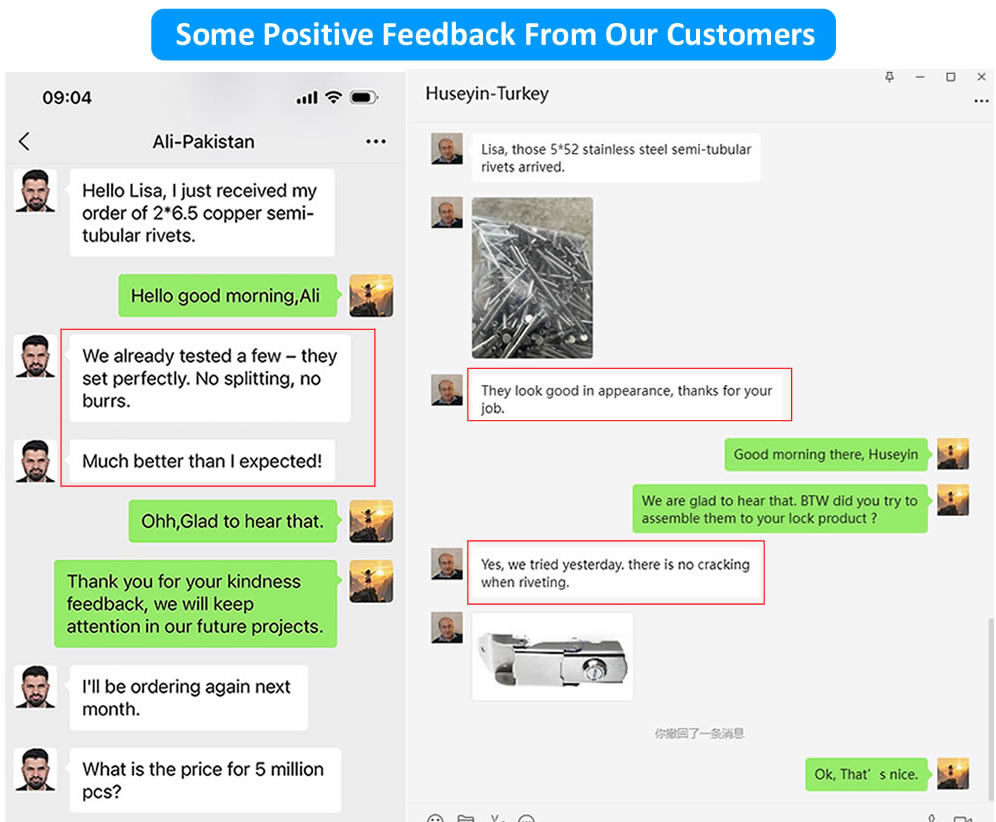
What Our Customers Say – Real Feedback
Where Brass Solid Rivets Are Used
- Electrical and electronics – Busbar connections, grounding terminals, switchgear assemblies, battery connections
- Automotive – Brake linings, clutch facings, starter motor assemblies
- Aerospace – Interior trim, non‑structural fastening
- Leather goods – Belt hole reinforcement, bag hardware, saddlery
- Jewellery and decorative – Permanent connections, decorative accents
- Industrial equipment – Nameplate attachment, guard mounting
Why Solid Rivets? – A Quick Comparison
For permanent joints requiring conductivity and vibration resistance, brass solid rivets often outperform alternatives. They have no threads to strip, no adhesive to age, and no heat distortion.
| Consideration | Solid Rivet | Screw/Bolt | Adhesive | Welding |
|---|---|---|---|---|
| Permanent joint | Yes | No | Yes | Yes |
| Conductivity | Excellent | Poor | None | Excellent |
| Vibration resistance | Excellent | Poor | Good | Excellent |
| Assembly speed | Fast | Slow | Slow | Slow |
| Cost per joint | Low | Medium | Medium | High |
How We Prevent Problems – 3 Critical Checks
A brass solid rivet that fails in the field can mean a short circuit or a loose panel. Here are three key failure modes we watch for:
- Head cracking during setting – We use polished carbide dies and replace them after 500,000 strokes. C2680 (harder) runs slower than C2600.
- Inconsistent shank diameter – Every coil is verified with a laser micrometer (±0.02mm). We reject coils that are within "standard" tolerance but outside our internal spec.
- Poor upset head formation – We never guess barrel length. We ask for your material stack thickness and recommend the exact length. Every batch is test‑set into your material before we ship.
How to Specify Brass Solid Rivets – In 4 Steps
- Shank diameter – Measure the hole size. Shank should be 0.05–0.10mm smaller than the hole.
- Overall length – Material stack thickness + 1.5× shank diameter (for the upset head).
- Head style & finish – Round/flat/countersunk/oval/mushroom; nickel/tin/silver/antique/natural.
- Quantity – Samples: 20–50 pcs free. Trial: 10,000 pcs. Production: 20,000+ pcs.
Your Order – What’s Inside the Box
- Rivets in sealed bags – Labeled with part number, batch number, and quantity
- Dimensional inspection report – 10 rivets measured from the batch
- Material certificate – Mill test certificate for the coil used
- Plating certificate – If applicable
- Certificate of Conformance – Signed by QA manager, batch‑traceable
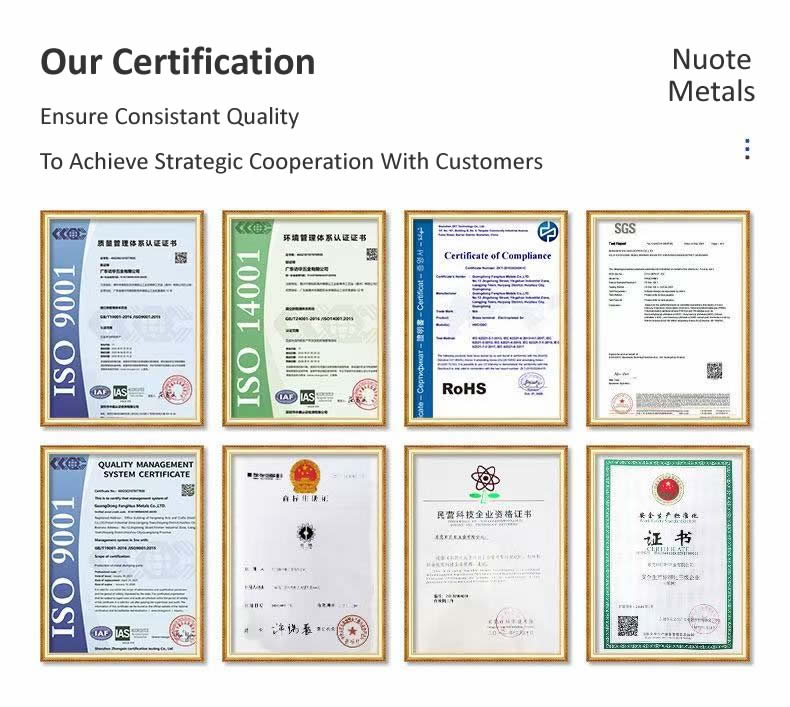
Nuote Metals is ISO 9001:2015 certified. RoHS and REACH declarations are provided on request.
How We Work – Practical Information
- Samples – 20–50 free pieces for standard stocked sizes (customer pays shipping)
- Trial order – 10,000 pieces recommended for first‑time validation
- MOQ – 20,000 pieces (standard sizes), 10,000 pieces (custom)
- Lead time (stock) – 5–7 business days
- Lead time (custom) – 12–15 business days
- Tooling charges – None for standard head styles (round/flat/countersunk, 0.8–8mm shank)
Three Questions We Answer Often
Q1: What is the difference between a brass solid rivet and a semi‑hollow brass rivet?
A: A solid rivet has no cavity—the entire shank deforms during installation, giving it maximum shear and tensile strength. A semi‑hollow rivet has a shallow cavity at the tail, reducing setting force by ~70% but offering slightly lower strength. Choose solid for load‑bearing joints, electrical connections, and permanent assemblies. Choose semi‑hollow for high‑volume production where installation speed is critical and loads are moderate.
Q2: Can brass solid rivets be used for electrical connections and soldering?
A: Yes. Brass offers ~28% IACS conductivity (C26000), suitable for busbar connections, grounding terminals, and switchgear. For soldering, we recommend tin‑plated brass solid rivets—the tin coating provides excellent solderability. For higher conductivity, copper solid rivets are also available.
Q3: What is the maximum length for brass solid rivets?
A: Standard lengths range from 2mm to 35mm. For shank diameters 3mm and above, we can produce custom lengths up to 50mm. However, as length exceeds 6× shank diameter, setting becomes more difficult. Contact us with your specific requirements for a feasibility check.
Request a Quote
To receive a firm quotation for brass solid rivets, please provide:
- Shank diameter (mm) – from 0.8mm to 8mm
- Overall length (mm)
- Head style (round / flat / countersunk / oval / mushroom)
- Finish (natural lacquered / nickel / tin / silver / antique)
- Estimated annual quantity
You can also attach a drawing, a photo of your current rivet, or a sample part. We will reply within 24 hours with tooling cost (if any), piece price, lead time, and free sample policy.
Send your RFQ to Nuote Metals today. No pressure, no obligation – just a clear, competitive quotation.
ホットタグ: 真鍮ソリッドリベット、中国ソリッドリベット、真鍮ソリッドリベットメーカー



X
当社は Cookie を使用して、より良いブラウジング体験を提供し、サイトのトラフィックを分析し、コンテンツをパーソナライズします。このサイトを使用すると、Cookie の使用に同意したことになります。
プライバシーポリシー