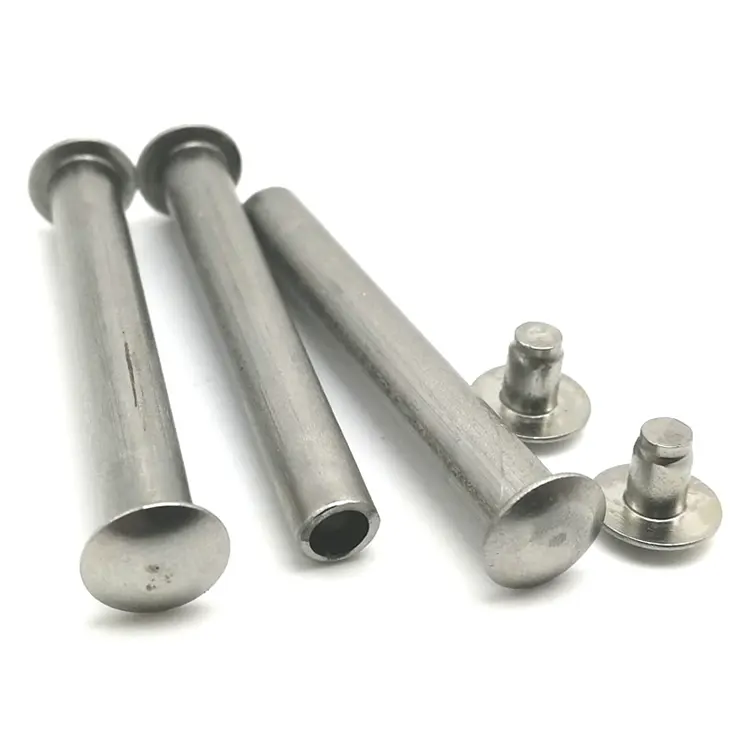
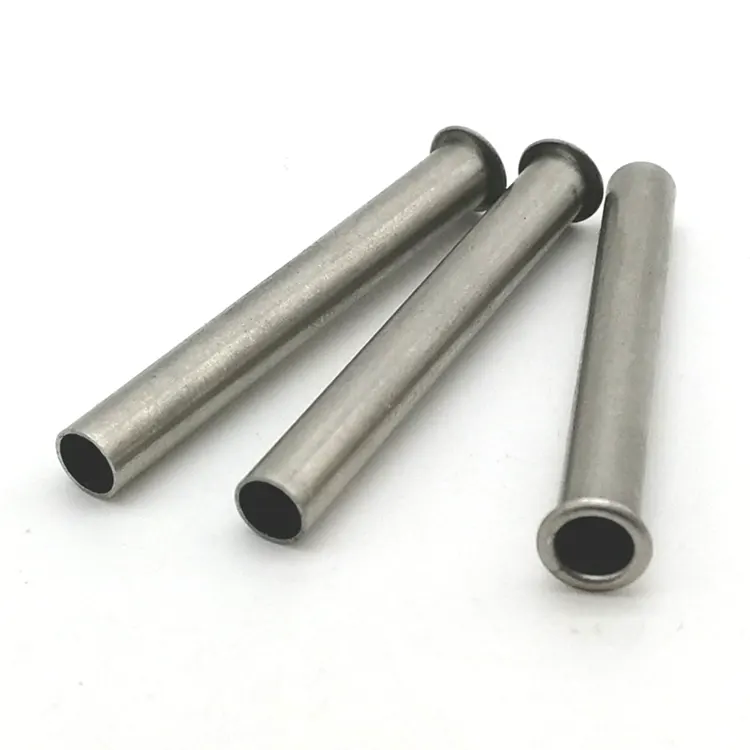
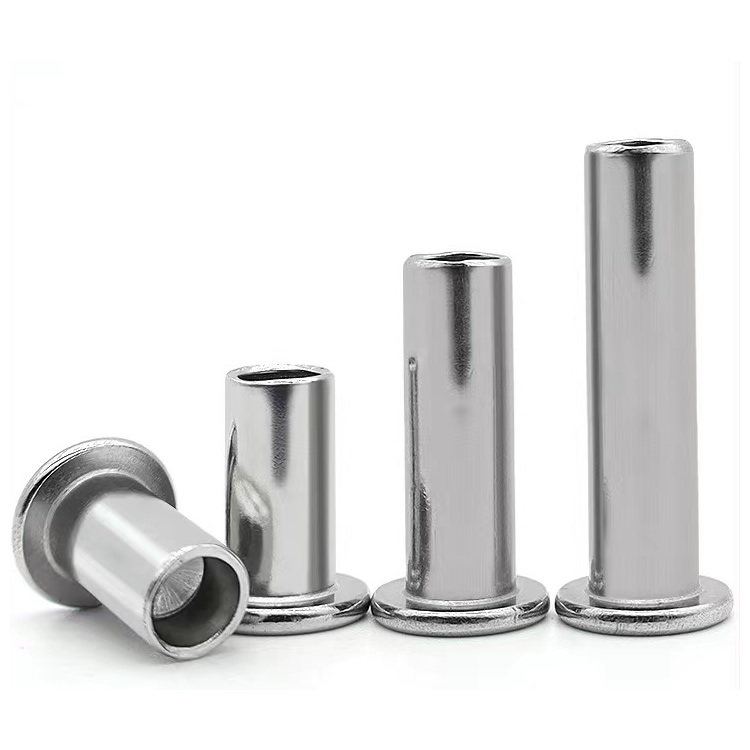
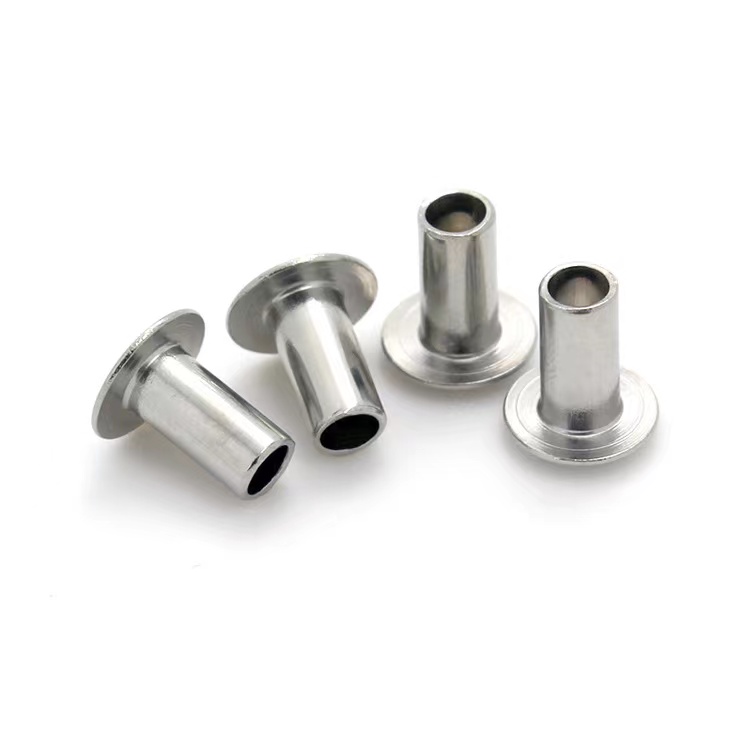
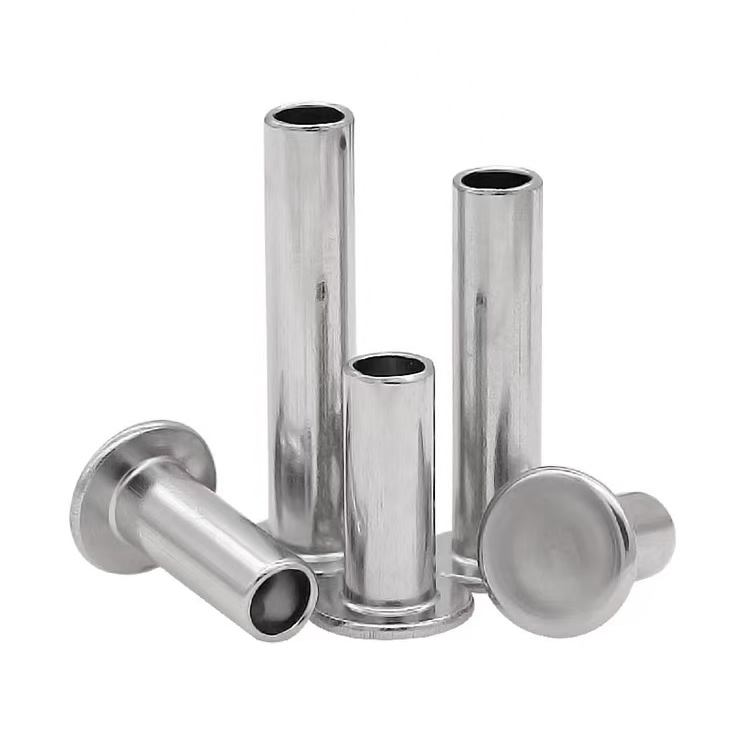
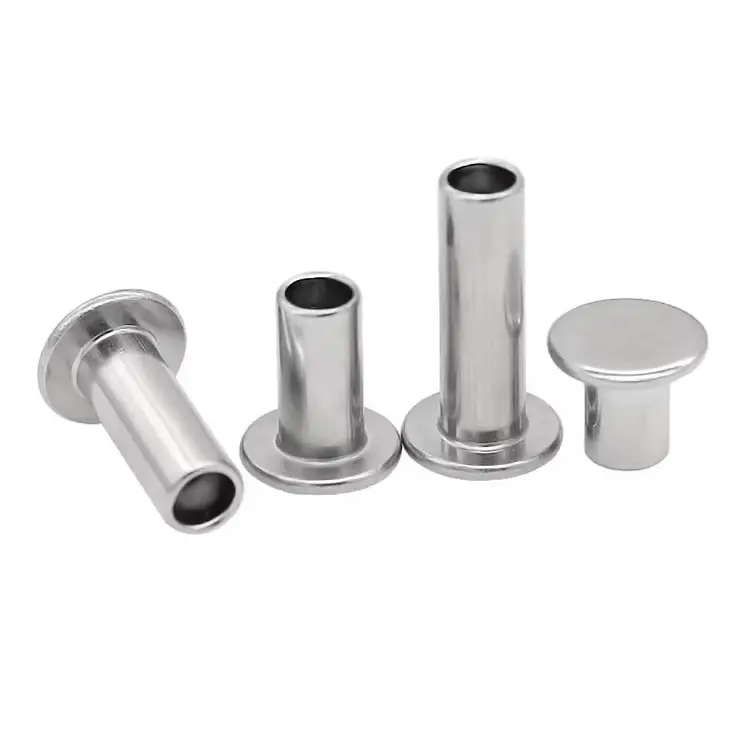
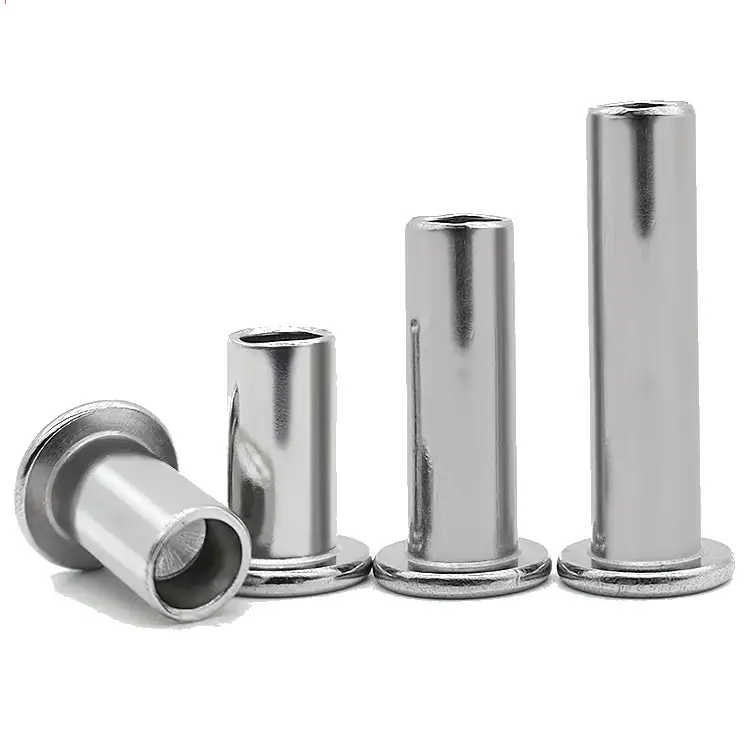
ステンレス鋼半管状リベット
信頼性の高いステンレス鋼の半管状リベットをお探しですか?中国の Nuote Metals は、自動車、船舶、産業用アセンブリ向けのカスタム ソリューションを提供しています。半管状のデザインはスムーズに広がり、過度な力をかけずにしっかりとグリップできるため、組み立て時間を節約できます。ステンレス鋼構造は錆びや腐食に強く、湿気の多い条件や屋外の条件でも長期にわたる性能を保証します。ヒンジ、ハンドル、革製品などの安定した強力な固定を必要とするメーカーに最適です。ジョイントの緩みや早期故障とは別れましょう。当社の工場では、正確な寸法と研磨仕上げを保証します。あなたの機器と同じくらい強力に機能する耐久性のあるリベットを当社にお任せください。
お問い合わせを送信
製品説明
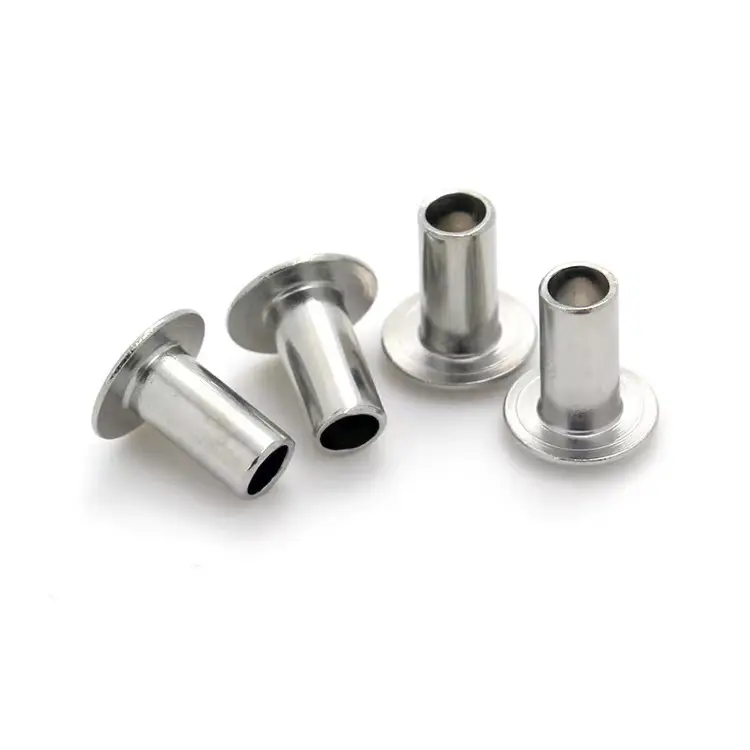
For assemblies exposed to moisture, chemicals, or salt spray, a standard steel rivet will eventually rust and fail. Stainless steel half tubular rivets offer the ideal combination of marine-grade corrosion resistance and low-force installation. The hollow cavity reduces setting force by approximately 70% compared to solid rivets, while the stainless body provides long-term durability in harsh environments.
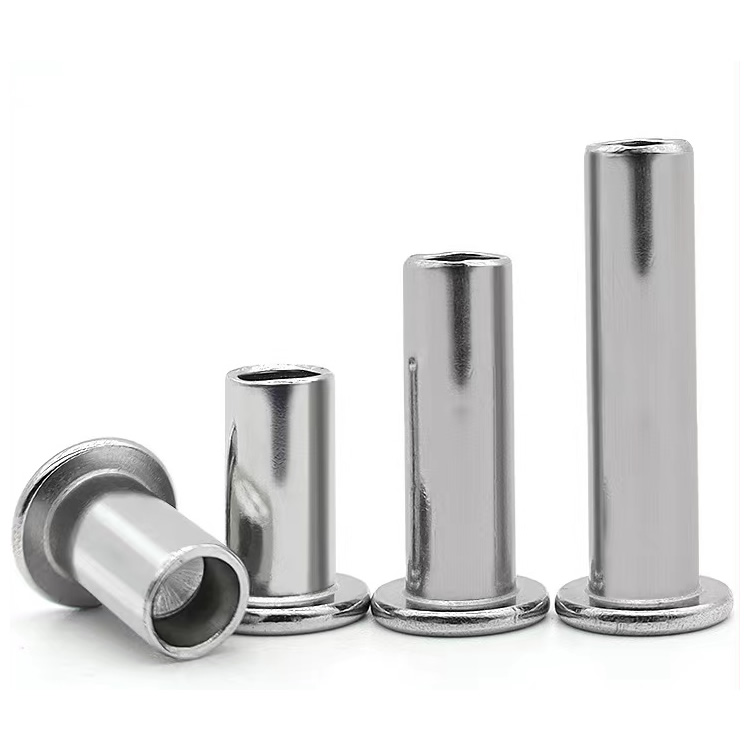
Nuote Metals manufactures stainless steel half tubular rivets from 304 and 316 grades using high-speed cold heading. Our process ensures consistent cavity depth, smooth head geometry, and burr-free shearing. This guide presents real-world case data, full technical specifications, and our transparent quality policies.
Different Material of Rivets We Make
We make different materials of Rivets, such as brass rivets, steel rivets, stainless steel rivets, aluminum rivets, and copper rivets.
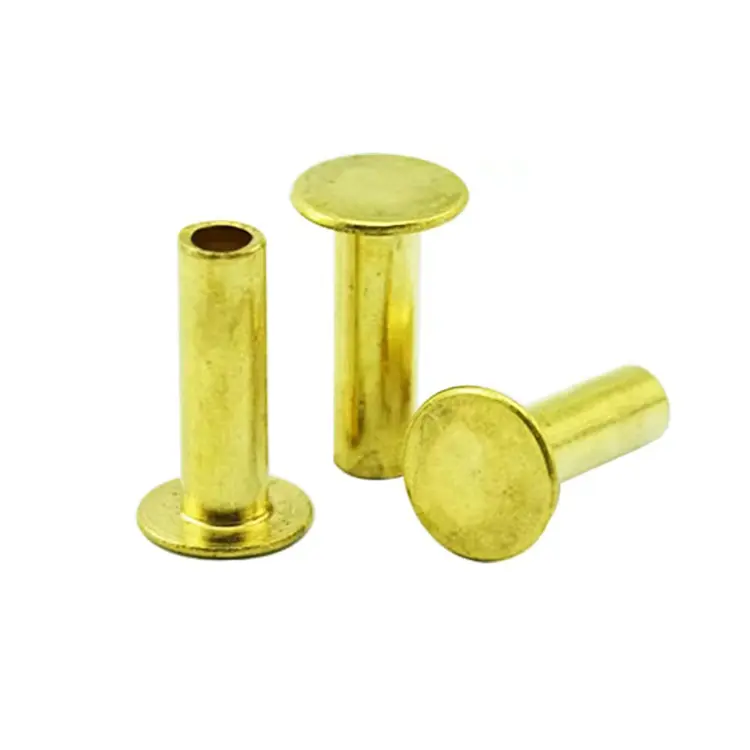
1. Brass Rivets, including brass solid rivets, brass semi-tubular rivets, brass tubular rivets.
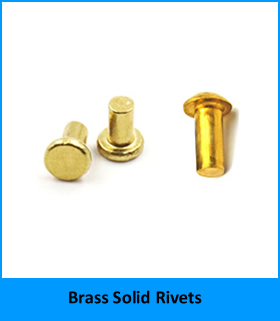
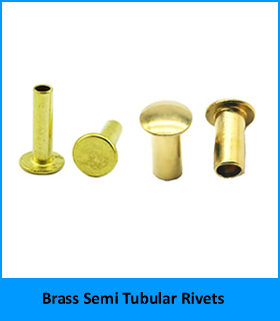
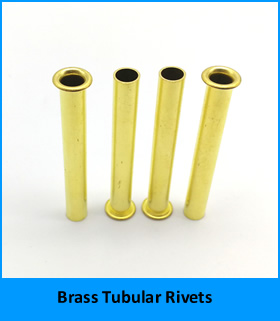
Click  to view more about our brass rivets.
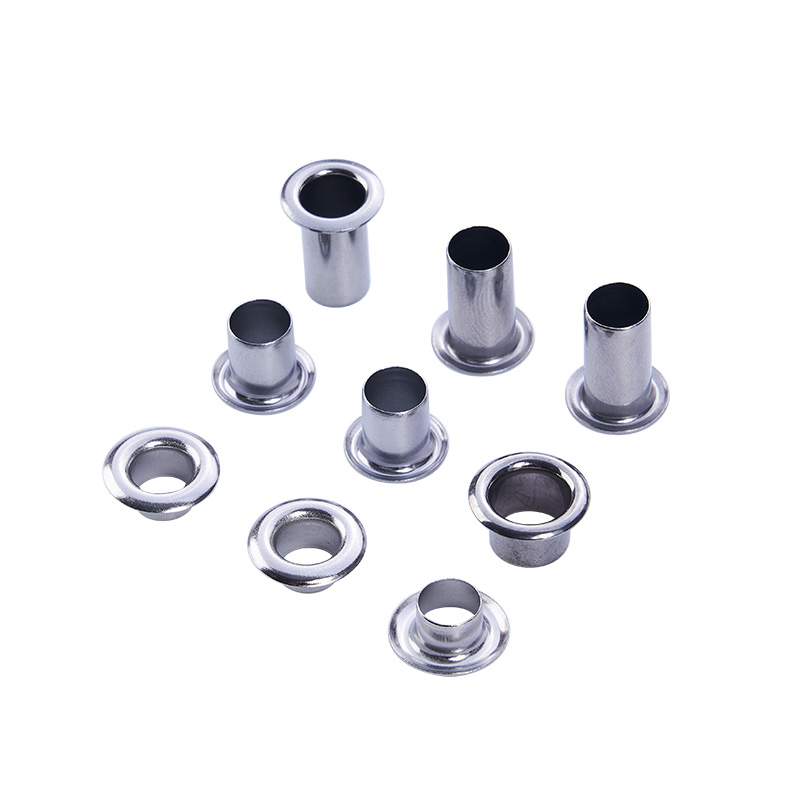
2. Stainless Steel Rivets,including stainless steel solid rivets,stainless steel semi-tubular rivets, stainless steel tubular rivets.
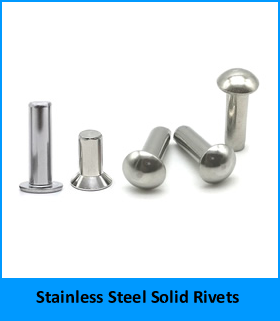
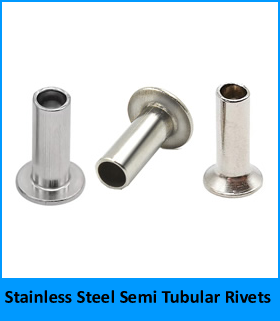
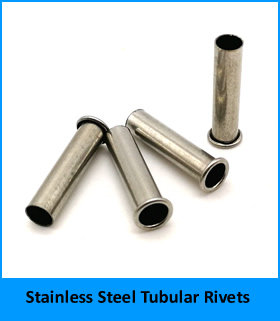
Do you want to know more about our stainless steel rivets? just click 
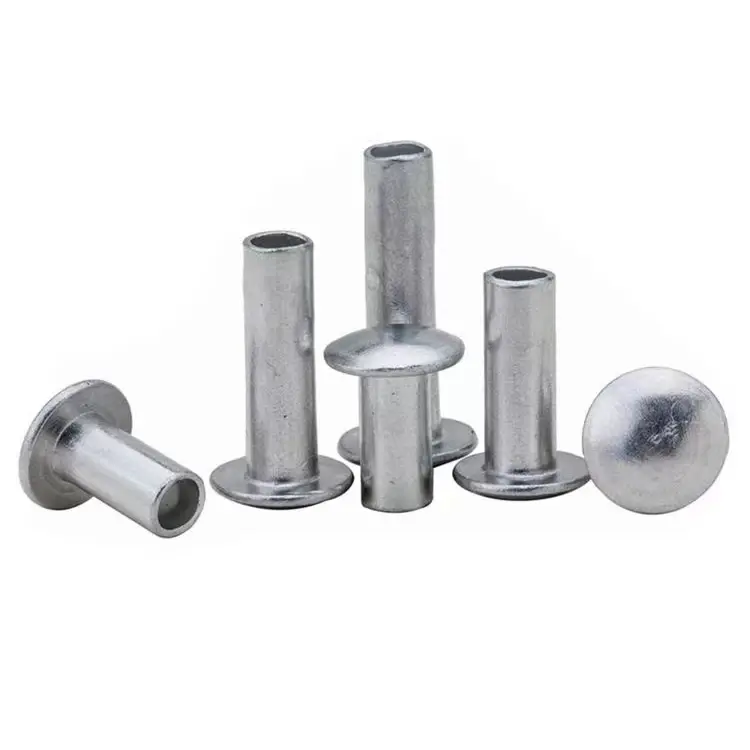
3. Aluminum Rivets, including aluminum solid rivets, aluminum semi-tubular rivets, aluminum tubular rivets.
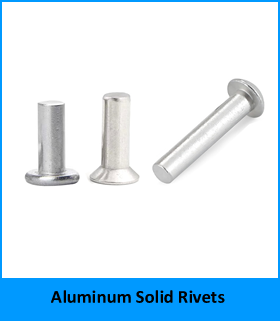
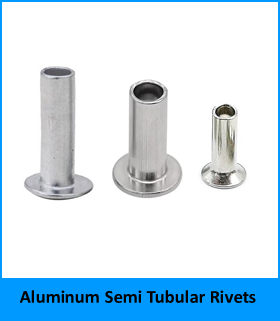
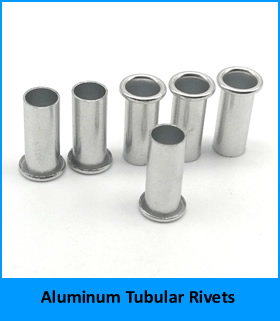
If you want to know more about our aluminum rivets, please click 
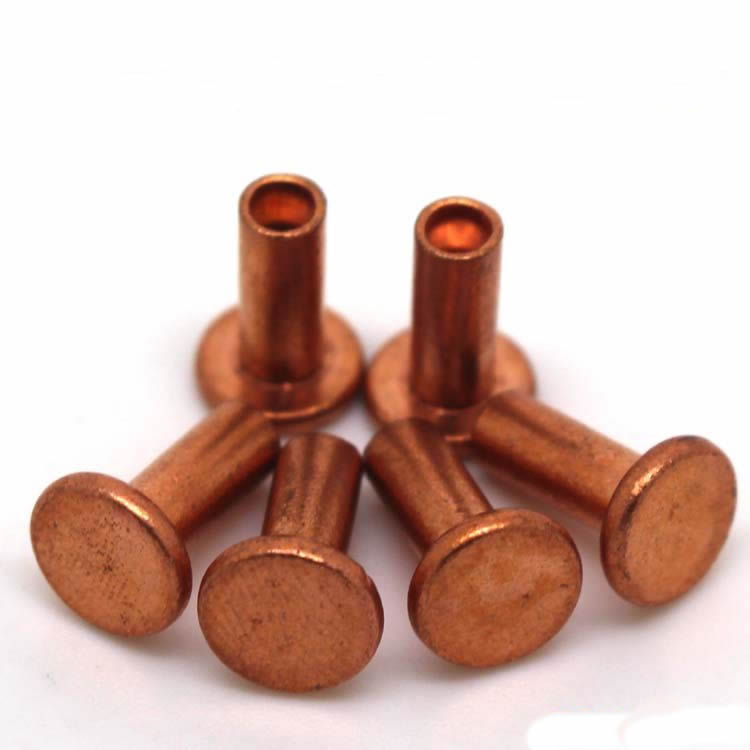
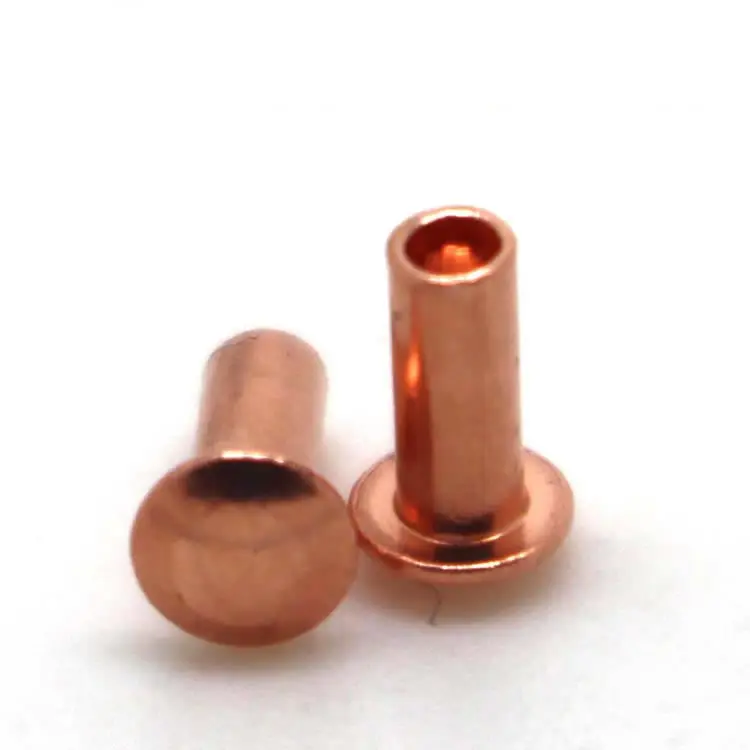
4. Copper Rivets, including copper solid rivets, copper semi-tubular rivets, copper tubular rivets.
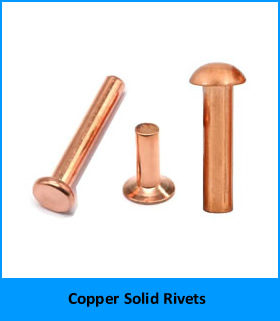
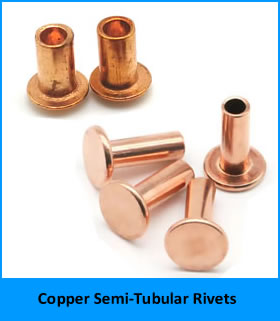
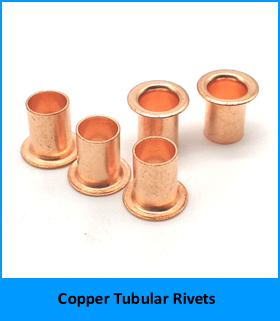
Click  to get more information of our copper rivets.
5. Steel Rivets, including steel solid rivets, steel semi-tubular rivets, steel tubular rivets.
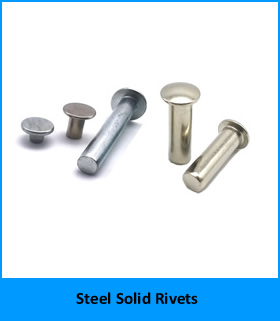
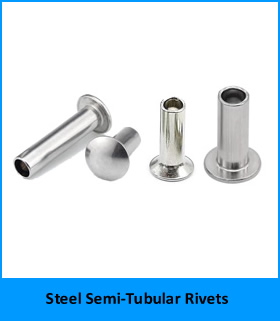
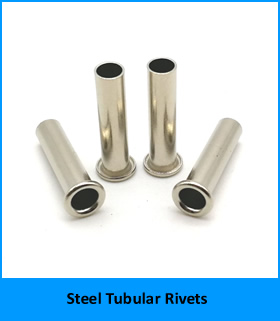
If you want to get more information of our steel rivets, please click 
Real-World Applications of Our Rivets
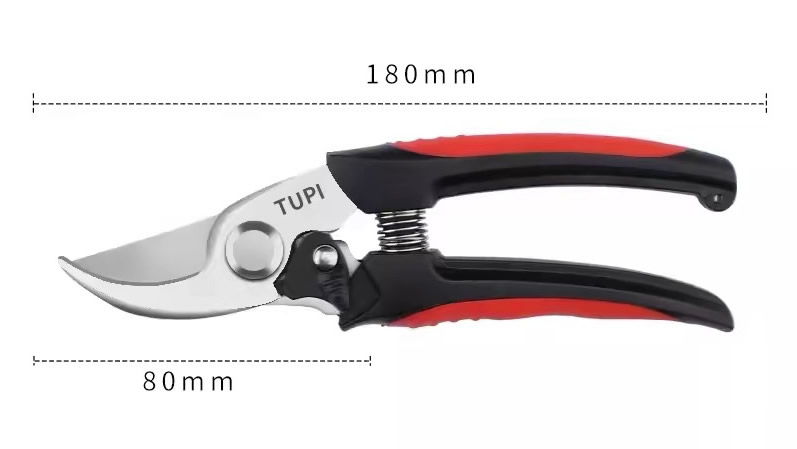
Case 1 – Garden Pruning Shears (Stainless Steel Blades, Stainless Rivet)
A garden tool manufacturer was experiencing consistent field returns of their premium pruning shears. The pivot rivet—a solid stainless steel component—was loosening after heavy cutting seasons, causing blade misalignment. They needed a rivet that would hold tight under repetitive shear stress without increasing assembly cost.
We recommended 304 stainless stainless steel half tubular rivets (5mm diameter, 12mm barrel length, passivated finish). The semi‑hollow cavity allowed controlled expansion during setting, creating a permanent swelled fit inside the pivot hole. Unlike the previous solid rivet, the half‑tubular version required only 30% of the setting force, eliminating blade distortion during assembly. After two years of production (over 400,000 units), the manufacturer reported a 97% reduction in pivot‑related returns. The rivet also shaved 1.5 seconds off each assembly cycle.
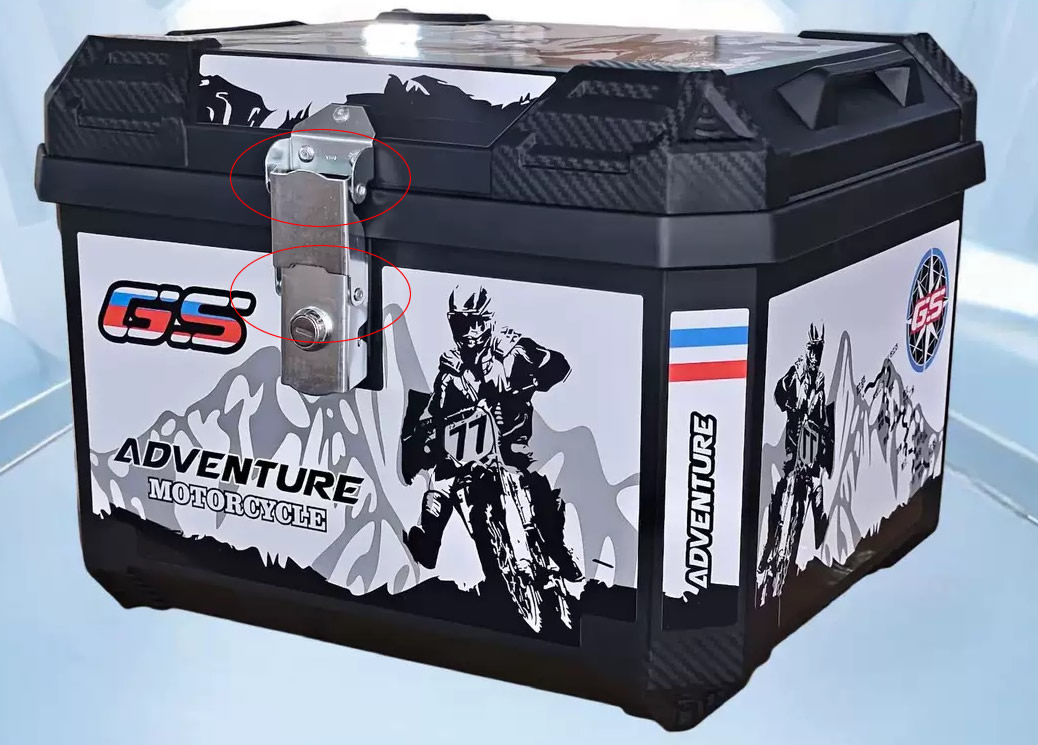
Case 2 – Motorcycle Top Case (ABS Shell, Stainless Steel Mounting Brackets)
A motorcycle luggage brand needed a fastener that could survive constant vibration, UV exposure, and occasional rain—without loosening or corroding. The original zinc‑plated steel rivets showed red rust after one season. The customer switched to 316 stainless stainless steel half tubular rivets (6mm diameter, 15mm barrel length). The 316 grade added molybdenum for chloride resistance (road salts, rain). The semi‑hollow tail rolled smoothly against the ABS shell without cracking the plastic. We supplied the rivets with a passivated finish to remove any surface free iron. After three years of field use across 10,000+ top cases, no rust spots or loose rivets have been reported. The customer now uses our rivets across their entire luggage line.
Technical Parameters
We produce these rivets from certified stainless steel wire. All dimensions are verified by optical sorting.
Material Grades and Properties
| Grade | Key Feature | Corrosion Resistance | Typical Application |
|---|---|---|---|
| 304 (UNS S30400) | General purpose, good formability | 200–500 hrs salt spray | Medical trays, food equipment, indoor industrial |
| 316 (UNS S31600) | Molybdenum added, excellent pitting resistance | 1,000+ hrs salt spray | Marine, offshore, chemical plants, coastal construction |
Standard Dimensional Range (304 / 316)
| Shank Dia (mm) | Head Style | Head Dia (mm) | Head Height (mm) | Barrel Length (mm) | Cavity Depth | Grip Range (mm) |
|---|---|---|---|---|---|---|
| 3.0 | Round / Oval / Flat | 5.0 – 5.5 | 1.8 – 2.2 | 4 – 12 | 45–55% of length | 1.5 – 4.0 |
| 4.0 | Round / Oval / Flat | 6.5 – 7.2 | 2.6 – 3.0 | 5 – 16 | 45–55% of length | 2.0 – 5.5 |
| 5.0 | Round / Oval / Flat | 8.0 – 9.0 | 3.2 – 3.6 | 6 – 20 | 45–55% of length | 2.5 – 7.0 |
| 6.0 | Round / Oval / Flat | 9.5 – 10.8 | 3.8 – 4.3 | 8 – 25 | 45–55% of length | 3.0 – 9.0 |
| 8.0 | Round / Oval / Flat | 12.5 – 14.5 | 5.0 – 5.8 | 10 – 32 | 45–55% of length | 4.0 – 12.0 |
Tolerances: Shank dia ±0.05mm, head dia ±0.15mm, length ±0.15mm. Custom head styles and barrel lengths available.
Mechanical Properties (5mm 304 Grade, Set into 2mm Steel)
| Property | Value |
|---|---|
| Single shear strength | 11,500 – 13,000 N |
| Tensile pull‑out | 6,200 – 7,500 N |
| Recommended hole size | Shank dia + 0.15 – 0.25 mm |
| Recommended setting force | 1.8 – 3.0 tons |
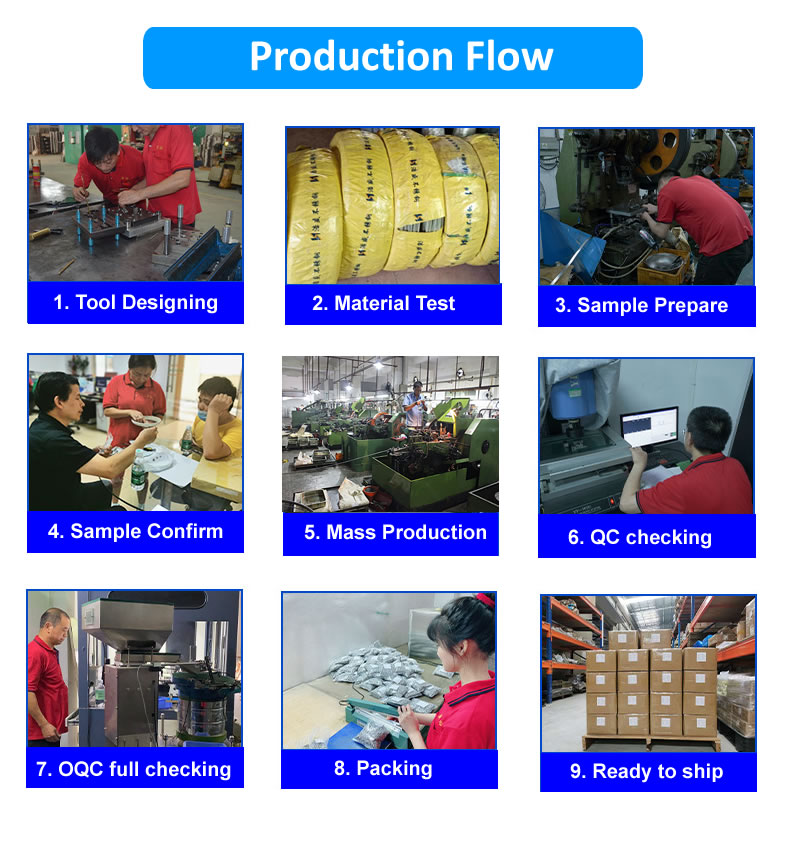
Our Seven‑Step Production Process
We follow a disciplined workflow for every batch of stainless steel half tubular rivets.
1. Material Sourcing – We purchase certified 304 or 316 wire from approved mills. Each coil has a heat number for full traceability.
2. Material Inspection – Incoming wire is tested with a spectrometer and tensile tester. We verify surface condition and diameter.
3.Tooling Customization or Setup – For new dimensions, we design carbide cold‑heading dies (lead time 15–25 days). For standard sizes, our technicians install and align existing tooling.
4.First Article Inspection – The cold header runs 50 sample rivets. We measure head diameter, head height, shank diameter, total length, and cavity depth. A full FAI report is sent to you for approval.
5.Mass Production – Upon approval, we run at 200–400 pieces per minute. In‑process checks occur every 2,000 pieces for critical dimensions.
6.Subcontracted Passivation (if required) – For applications needing enhanced corrosion resistance, we send batches to our certified passivation partner. We verify free iron removal per ASTM A967.
7.Final Outgoing Inspection – We use optical sorting machines to inspect 100% of parts for head geometry, length, and cavity depth. An AQL sample (Level II, 1.0) is pulled for shear testing. A Certificate of Conformance accompanies every shipment.
For more infomation about our production line, please check the below video.
Quality Assurance and Certifications
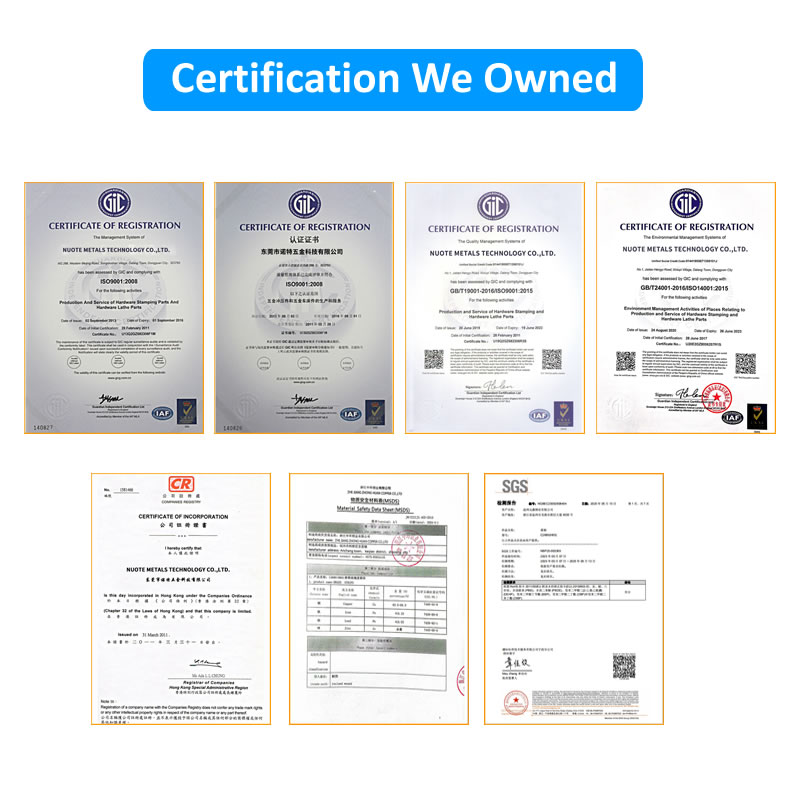
Our production of stainless steel half tubular rivets is supported by:
Certification Scope
- ISO 9001:2015 Quality management system
- RoHS (2011/65/EU) Compliance for all materials
- REACH SVHC declaration
- ASTM F467/F468 Reference for nonferrous fasteners
Each shipment includes:
- Mill test certificate (material chemistry and hardness)
- Dimensional inspection report (10 pcs per batch)
- Passivation certificate (if applied)
- Signed Certificate of Conformance
Transparent Policies
- Sample policy – 20 free pieces for any standard size (customer pays shipping)
- Minimum order quantity – 2,000 pieces for 304; 3,000 for 316
- Lead time – 7–10 business days for stocked sizes; 15–20 days for custom dimensions
- Tooling charges – None for round/oval/flat heads in standard diameters
- Return policy – Defective parts replaced at no cost
Nuote Metals does not charge for re‑sampling if first articles fail to meet your drawing tolerances.
Frequently Asked Questions
Q1: What is the difference between a stainless steel half tubular rivet and a solid stainless steel rivet? When should I choose the half‑tubular version?
A: The primary difference is the hollow cavity in the tail. A stainless steel half tubular rivet requires only 25–30% of the setting force needed for a solid rivet of the same diameter. This makes it ideal for automated assembly, soft materials (plastic, composites, leather), and applications where access is limited. Solid rivets provide slightly higher shear strength but need heavy squeezing or a bucking bar. For most industrial, marine, and medical applications where installation speed and material protection matter, we recommend the half‑tubular design. Only choose solid rivets for extreme structural loads or where the joint will be subjected to continuous high impact.
Q2: How do you prevent work hardening cracks in stainless steel half tubular rivets during cold heading?
A: Stainless steel (especially 304) work hardens rapidly. We use polished carbide heading dies and a multi‑stage cold heading process (three blows: squaring, pre‑forming, and final cavity extrusion). This distributes strain and prevents micro‑cracks. We also apply a chlorine‑free extreme‑pressure lubricant. For 316 grade, which is more ductile, cracking is rarely an issue. Our internal rejection rate for stainless steel half tubular rivets is 0.4%, significantly below the industry average of 2–3%. Every batch undergoes dye penetrant testing on 10 samples per 10,000 pieces.
Q3: Can stainless steel half tubular rivets be used in direct contact with aluminum without galvanic corrosion?
A: Yes, but precautions are necessary. Stainless steel is cathodic (noble) relative to aluminum. In the presence of an electrolyte (saltwater, high humidity), galvanic corrosion can attack the aluminum. To prevent this, we recommend: (1) using a nylon or EPDM isolating washer between the rivet head and aluminum surface, (2) applying a sealant such as polyurethane around the rivet after setting, or (3) specifying a coated rivet (e.g., with a thin epoxy layer). For dry indoor applications, the risk is negligible. If your assembly will be submerged or used in marine environments, we suggest switching to aluminum rivets or using 316 stainless with a thick isolating barrier. Contact us for a galvanic compatibility chart.
Why Choose Us for Stainless Steel Half Tubular Rivets
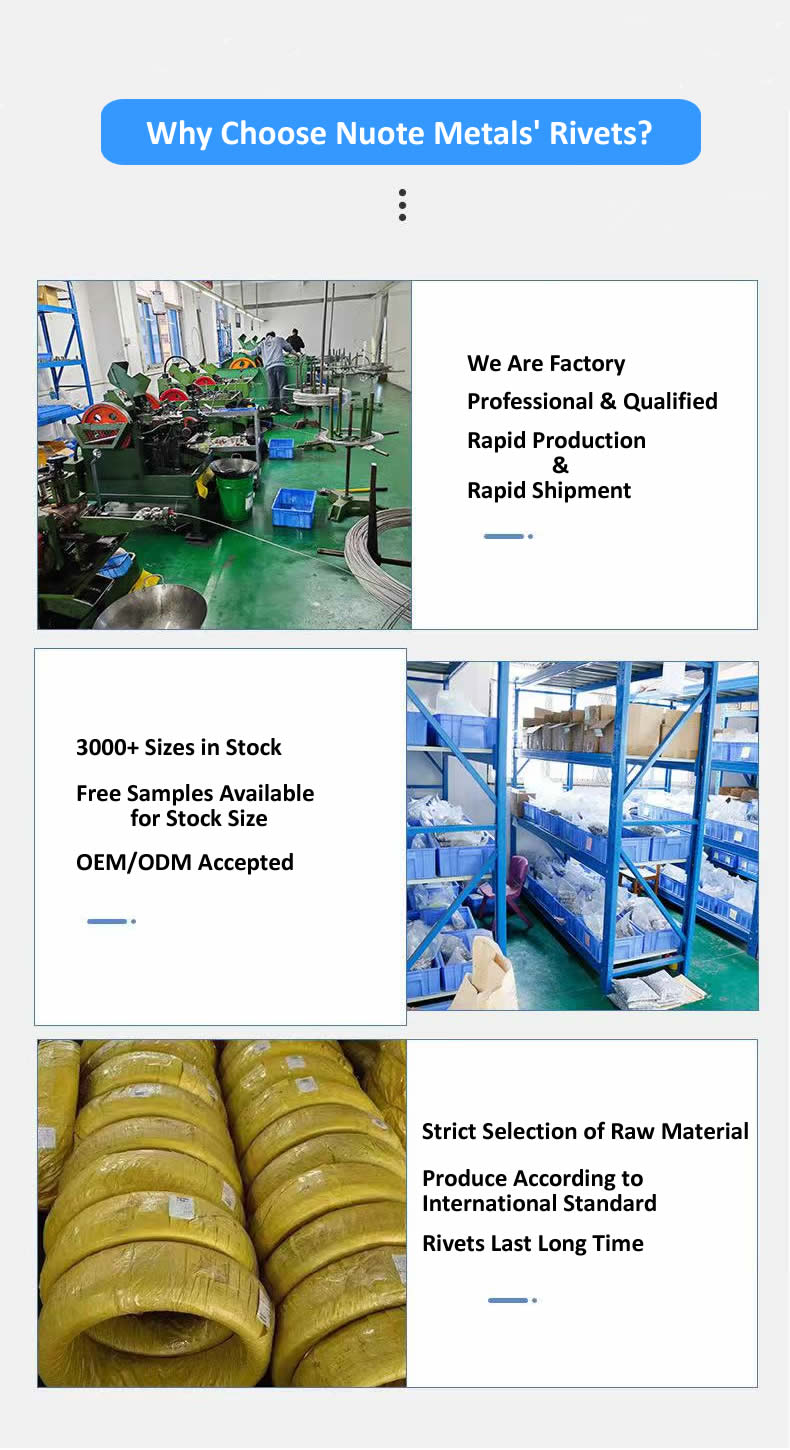
- In‑house cold heading – full control from wire to finished rivet
- 304 and 316 always in stock for diameters 3–8mm
- Passivation available in‑house (optional)
- 100% optical sorting for critical dimensions
- Free sample program – test setting before committing to production
- Full traceability – MTC, CoC, and passivation reports with every order
Contact Nuote Metals today to request a sample pack or a compliance package for your stainless steel half tubular rivets project.
ホットタグ: ステンレス鋼半管状リベット、ステンレス リベット メーカー、半管状リベット サプライヤー



X
当社は Cookie を使用して、より良いブラウジング体験を提供し、サイトのトラフィックを分析し、コンテンツをパーソナライズします。このサイトを使用すると、Cookie の使用に同意したことになります。
プライバシーポリシー